Reorienting Pedagogy in Secondary Mathematics Education and Evaluating the Effectiveness of Digital Resources under the NEP 2020 Framework
Saurabh Kapoor1,* and Ashok Kumar Sahoo2
1Department of Education in Science and Mathematics, Regional Institute of Education (NCERT), Bhubaneswar, Delhi, India
2Regional Institute of Education, Utkal University, Vani Vihar, Bhubaneswar, Delhi, India
E-mail: saurabh09.ncert@gmail.com
*Corresponding Author
Received 07 April 2026; Accepted 21 July 2026
Abstract
Over the past four years, the Indian education system has increasingly adopted essential 21st-century skills in line with the vision of NEP 2020. Among these, the integration of digital resources has significantly transformed traditional classroom teaching. In mathematics education, digital resources create new learning opportunities and positively influence students’ understanding. Therefore, this study examines the effect of digital resources on learning mathematics at the secondary school level. Using survey data collected from different Jawahar Navodaya Vidyalayas (JNVs), the study applies ANOVA and Chi-square tests to analyse the impact of digital resources on students’ mathematics learning outcomes. The findings offer valuable insights for teachers, curriculum designers, and policymakers to improve technology integration in mathematics education.
Keywords: ANOVA, Chi-square test, digital resources, mathematics education, NEP 2020, statistical analysis.
1 Introduction
Inclusion of Sustainable Development Goal (SDG) 4 in the National Education Policy (NEP) 2020 striving to “ensure inclusive and equitable quality education and promote lifelong learning opportunities for all” by 2030. It is the foremost education policy (EP) of the twenty-first century, incorporated all of essential and significant global skills into the Indian education structure. This Policy offers “the revision and revamping of all aspects of the education structure, including its regulation and governance, to create a new system that is aligned with the aspirational goals of 21st century education, including SDG4, while building upon India’s traditions and value systems” (NEP, 2020). The knowledge landscape in the present era is facing noteworthy hasty changes at global level due to machine learning, numerous dramatic scientific and technological changes including rise of data science, artificial intelligence, and big data (Goos et al., 2020).
For India’s future, inclusion of 21st century skills in the education system are very essential. For this, Mathematics has significant importance in helping children to enhance logical thinking (Putri et al., 2020). Children’s creativity and innovation, adaptability and flexibility, digital literacy, teamwork and communication and critical thinking and problem solving are all enhanced when 21st century skills are combined into the curriculum (Ilhan et al., 2024).
In present era, the practice of digital resources (DRs) has noteworthy influence in education due to the change in the conventional classroom practices and initiating up new learning opportunities. DRs have potential to enhance students’ learning behavior and outcomes, its utilization has drawn a lot of interest in mathematics education (Sazabo et al., 2020). Further the manuscript enlightening the effects of these skills on learning outcomes (LOs). For this, the research employed the survey method to acquire data from various Jawahar Navodaya Vidyalayas (JNVs) for examining the impact of 21st century skills on students’ LOs in mathematics. The data was analyzed employing the statistical techniques including Chi-square test and Analysis of Variance (ANOVA).
The study confined to the How does transitioning from procedural instruction to experiential learning under NEP 2020 with inclusion of DR affect secondary students’ conceptual clarity? What ways do interdisciplinary or Multidisciplinary approaches in secondary mathematics improve student engagement & reduce Mathematics anxiety? Are secondary mathematics teachers translating the competency-based guidelines of NCF-SE into day to day classroom teaching?
Here the purpose of this manuscript is to bridge up the gap in the existing literature regarding Indian perspective to usefulness of DRs in the mathematics education at school level. The study provides the insights of the challenges and benefits related to the incorporation of DRs in mathematics education. The outcomes have significances for anyone involved in education who hunger to maximize the use of technology to expand students’ mathematical LOs and experiences. These results enhance to the body of evidence in Indian context already available on the practice of DRs in mathematics learning and have implications for educators, curriculum designers, and legislators who purpose to maximize the utilization of 21st century skills in math classes.
2 Literature Review
From the past few years, 21st century skills digital learning resources (DLRs) have gained popularity as a way to improve mathematical education in schools. However, actual statistics is required to demonstrate how well DLRs expand students’ LOs in mathematics. The statistical data supporting the efficacy of DLRs for math instruction at the school level is analyzed in this review of the literature.
The First International Mathematics Study (FIMS), a cross-national study with 12 countries, was carried out by the IEA in the early 1960s to compare mathematical education systems worldwide (Garden, 1987). Douglas (2001) describes the INFINITY Project, a cooperative endeavor among educators, administrators, and business executives with the goal of developing a high school engineering curriculum. Researchers and teacher educators have focused on understanding how teachers learn about mathematical content, pedagogical strategies, and student thinking during educational reforms (Izsák et al., 2003). They examined how elementary and high school teachers incorporated new conceptually based instructional resources aligned with the “Principles and Standards for School Mathematics” into their teaching practices.
Passolunghi et al. (2007) conducted a study to identify the factors influencing mathematics learning at the beginning of primary school. Meanwhile, in Oklahoma, higher education institutions are collaborating with K-12 systems to address the issue of college freshmen requiring remedial education. Safdar et al. (2011) investigated the effectiveness of Information and Communication Technology (ICT) in teaching mathematics at the secondary level in Pakistan. Whereas, Maurya, N., and Sharma, S. (2023) reported role of technology and digital learning in NEP 2020 then Chetana Shakya (2025) documented a case study on Online Educational Resources keeping in view of the recommendation of the NEP 2020 and NCFSE 2023. This create an interest towards utilization of the digital resources in the classroom transection.
Tay et al. (2012) observed the pedagogical strategies employed “the realm of technology-enhanced education” in a Singaporean primary school to teach mathematics and English using “information and communication technology (ICT)”. Hierarchical linear models used by Tarr et al. (2013) to analyze pupils’ performance on a range of consequence measures including testing of common objectives, assessments of cognitive and problem-solving skills, and standardized achievement exams. Nabiyev et al. (2013) evaluated a distant learning program made AI named ARTIMAT to assist students in solving mathematical puzzles. The study examined usability and conceptual competency of the system through student and instructor input. Saavedra et al. (2014) emphasized on the significance of a Game Development Process through a methodical approach in the construction of educational games that incorporate Software Engineering principles with DLRs. Lin et al. (2017) evaluated the traditional teaching methods with DLRs. Results of the study indicated that DRs improved LOs and motivation as compares to traditional education to align with classroom teaching.
Muftisada et al. (2020) wanted to determine the effect of AI on Moroccan students, employed smartphones for learning. Mardenova et al. (2020) scrutinized the competence of Khan Academy (“a well-known free online learning resource”) in mathematics instruction. They assessed teaching technique of Khan academy and Student LOs. Oprea et al. (2021) developed an instructive robotics project to educate “wireless communication technologies” smart devices in a classroom setting. In the framework of new normal education, Barrientos (2021) looked into how grade 8 pupils’ use of math apps affected their performance in the subject.
In a different context, Rahiem (2021) investigates the use of digital storytelling in early childhood education. Through a case study of ‘a storytelling-art-science club in Jakarta, Indonesia’, the researcher explores the motivations and benefits of incorporating digital storytelling in early childhood education. Recognizing the importance of education quality, Hakim et al. (2021) propose innovative learning applications to enhance students’ understanding of discrete mathematics. The study aims to address the low graduation rate of students who struggle with discrete mathematics at the university level. Nurfalah et al. (2021) assessed the effectiveness of using digital technology in mathematics learning. The study identified obstacles such as limited time, lack of facilities, and limited access to DRs. It recommended the habit of digital media and mathematical software for improvement of students’ understanding of mathematical concepts while acknowledging the limitations of e-learning in increasing student learning independence.
Kamberi et al. (2021) conducted a statistical analysis on the impact of information technology in mathematics learning. The research demonstrated that integrating information technology enhanced students’ skills and motivation to learn mathematics in grades VI-IX. The study highlighted the role of information technology in promoting high-quality mathematics learning.
The National Education Policy (NEP) 2020 marks a historic paradigm shift in India’s educational landscape, fundamentally redefining the goals of secondary schooling away from traditional specialization towards a holistic, student-centric, and skill-based model (Adil, 2025). Within this framework, secondary mathematics instruction is facing an unprecedented turning point, moving away from rote memorization and exam-driven formulas toward fostering higher-order 21st-century competencies like computational thinking, mathematical modelling, and logical reasoning (Kundu, 2026; Lukose, 2023). Rather than treating math as a disconnected, theoretical subject, recent implementation directives – such as the Central Board of Secondary Education’s (CBSE) competency-based assessment models and the Aryabhata Ganit Challenge – stress the practical application of mathematical concepts to real-world scenarios (Education, 2024).
Current literature identifies Computational Thinking (CT) – a structured problem-solving methodology rooted in algorithmic thinking and logical abstraction – as a critical bridge between mathematics instruction and modern career readiness (Hissaria and Grover, 2024). Without targeted professional development and continuous capacity-building programs, over-reliance on digital tools can risk distorting independent thinking or becoming a source of cognitive distraction (Pathak, 2025; Patil, 2022). Empirical studies reveal that secondary mathematics teachers often face systemic resistance, severe infrastructural shortages (such as poor internet connectivity and lack of devices in rural sectors), and a lack of specialized pedagogical training to effectively blend technology with abstract mathematical concepts (Bharti, 2023; Pathak, 2025).
Overall, these studies contribute to the understanding of the effectiveness of ICT and digital learning in mathematics education, highlighting the importance of access to technological resources, appropriate pedagogical strategies, and considering the specific context and needs of students.
3 Methodology
The purpose of the study is to investigate the impact of DLRs secondary school level in LOs of the mathematics. Figure 1 depicts the framework of the research. Experts decided the sample size and population of the study. There is descriptive research approach employed to collect data.
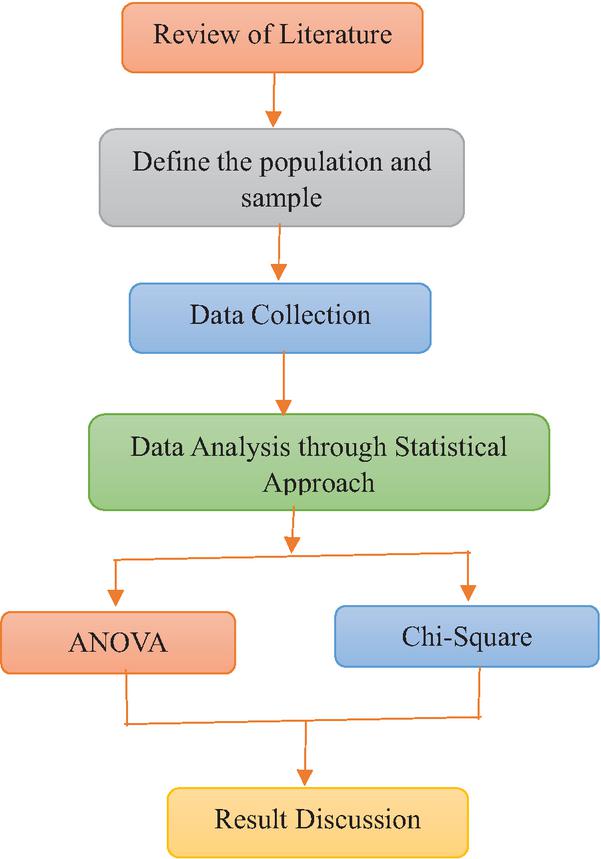
Figure 1 Proposed framework of the study.
3.1 Research Questions
• How does transitioning from procedural instruction to experiential learning under NEP 2020 with inclusion of Digital Resources affect secondary students’ conceptual clarity?
• What ways do interdisciplinary or Multidisciplinary approaches in secondary mathematics improve student engagement & reduce Mathematics anxiety?
• Are secondary mathematics teachers translating the competency-based guidelines of NCF-SE into day to day classroom teaching?
3.2 Population and Sample
The study includes the numerous JNVs of eastern region of India for collecting the data. It conducts survey on 108 students (ages 13 to 17 years) based on their keenness to participate in the research. We wanted to include heterogeneous group of students based on their age from different JNVs to acquire a more wide-ranging viewpoint on the usage of DLRs for mathematics education.
3.3 Data Collection
The study prepared questionnaire on Google form for gathering the data. To explore numerous facts regarding the utilization of DLRs, the questionnaire addressed multiple things for learning mathematics such as how often people use DRs, what kinds of DRs they use, about DLRs’ effectiveness and participants’ demographic information. The study focused on to maintain the quality of the data collection procedure by employing an online platform and it should be convenient and effective for the participants and researchers.
4 Data Analysis
For analyzing the collected data, the study employed a software “Statistical Package for the Social Sciences (SPSS)”. We first computed descriptive statistics including frequencies, means, percentages and standard deviations for summarizing and demonstrating glimpse of the data and participants’ responses. These descriptive statistics of the data set is providing us to insights about general trends and patterns.
Table 1 Data frequency based on gender
| Gender | |||||
| Frequency | Percent | Valid Percent | Cumulative Percent | ||
| Valid | Female | 36 | 33.3 | 33.3 | 33.3 |
| Male | 72 | 66.7 | 66.7 | 100.0 | |
| Total | 108 | 100.0 | 100.0 | ||
The Table 1 provides a clear breakdown of the number of male and female participants, indicating that out of the total sample size of 108 students, 72 males and 36 females.
Table 2 Data Frequency based on age
| Age | |||||
| Frequency | Percent | Valid Percent | Cumulative Percent | ||
| Valid | 13 | 12 | 11.1 | 11.1 | 11.1 |
| 14 | 23 | 21.3 | 21.3 | 32.4 | |
| 15 | 38 | 35.2 | 35.2 | 67.6 | |
| 16 | 25 | 23.1 | 23.1 | 90.7 | |
| 17 | 10 | 9.3 | 9.3 | 100.0 | |
| Total | 108 | 100.0 | 100.0 | ||
The table shows that the surveyed students were distributed across a range of ages. The highest number of participants fell into the age category of 15, with 38 students (35.2% of the sample). The second largest group was the 14-year-olds, accounting for 23 students (21.3%). This indicates that the majority of the participants were between 14 and 15 years old.
Table 3 Data Frequency based on class
| Class in which you are studying presently | |||||
| Frequency | Percent | Valid Percent | Cumulative Percent | ||
| Valid | 6 | 4 | 3.7 | 3.7 | 3.7 |
| 7 | 9 | 8.3 | 8.3 | 12.0 | |
| 8 | 7 | 6.5 | 6.5 | 18.5 | |
| 9 | 64 | 59.3 | 59.3 | 77.8 | |
| 10 | 24 | 22.2 | 22.2 | 100.0 | |
| Total | 108 | 100.0 | 100.0 | ||
Majority of students (59.3%) were in class 9. There is a gradual increase in the number of students from lower to higher classes. Cumulative percent increases steadily from class 6 to class 10, reaching 100%. Classes 6 to 8 had lower representation compared to classes 9 and 10.
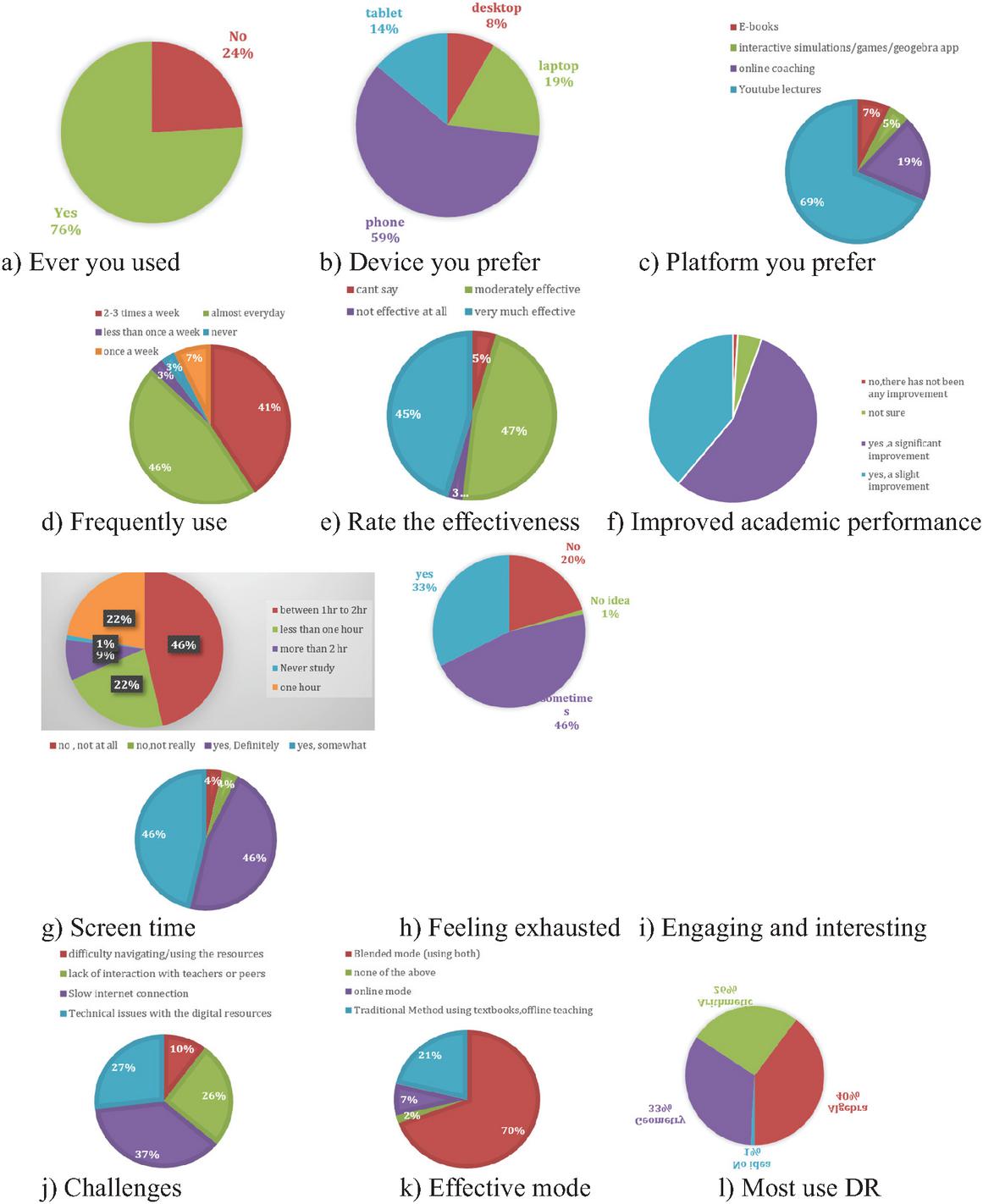
Figure 2 Data representation of using DLR for studying mathematics.
Based on the collected information, 75.9% (82 students) reported having used digital learning resources for studying mathematics before as showed in figure 2(a). The phone was the most preferred device for studying mathematics on a regular basis, with 59.3% (64 students) selecting it as their preferred device. According to figure 2(b) and 2(c), laptop was the second most preferred device, chosen by 18.5% (20 students), followed by the tablet with a preference of 13.9% (15 students). YouTube lectures were the top choice among students (68.5%) for better understanding of mathematics. Online coaching was the second most preferred platform (19.4%), followed by e-books with a lower preference (7.4%). The majority of students (46.3%) reported using digital learning resources for studying mathematics almost every day. This indicates a high frequency of utilization and reliance on these resources. A significant proportion of students (40.7%) reported using digital learning resources 2–3 times a week. This suggests a consistent integration of these resources into their mathematics study routine as depicted in Figure 2(d).
As depicted in Figure 2(e), small number of students (2.8%) reported that digital learning resources were not effective at all for studying mathematics. In Figure 2(f), the data suggests that the majority of students (94.5% – combining both significant and slight improvements) have seen positive effects on their academic performance in mathematics due to the utilization of DLR. This reinforces the notion that these resources are beneficial in enhancing learning outcomes in mathematics education. According to Figures 2(g) and 2(f), the data indicates that a significant proportion of students (87.0% – combining may be and no responses) do not perceive any negative impact on their academics from the use of DLR in mathematics. This reinforces the idea that these resources are generally viewed as helpful rather than detrimental to their learning experience. It is important to take care of your eyes and take breaks when studying with digital devices to prevent eye strain. The data shows that a significant percentage of students (71.3% – combining occasionally and yes responses) have experienced redness or itching in their eyes while studying with digital devices.
According the Figures 2(g) and 2(h), The majority of participants (46.3%) stated that they used a screen for one to two hours each day to learn mathematics. This suggests that the most typical time spent on math study falls within this range. This suggests that online studying can be physically and mentally draining for a considerable number of individuals. Around 46.3% of participants reported feeling exhausted sometimes while studying online. The data suggests that using multiple websites during study time may increase distractions and divided attention, and also enhance negative impact on concentration and overall study effectiveness.
According to the Figures 2(i), 2(j), 2(k) and 2(l), a small percentage of participants (3.7%) disagreed that DRs make mathematics more engaging and interesting, either not at all or not really. This implies that some people might not find digital materials to be as successful in raising their level of interest or involvement in the topic. Data demonstrates that perceptions and preferences of individuals varied according to mode of learning mathematics. Although “blended learning” is the utmost used approach, some people also employed online and conventional methods of learning.
Analysis of Variance (ANOVA) We applied an “analysis of variance (ANOVA)” test to investigate how different age groups rated the practicality of DRs for mathematical study. Table 4 demonstrated the descriptive statistics of the one-way ANOVA. The study used the one-way ANOVA to determine significance of variation between perception of participants and their age. It assisted us to gain a better insight of effectiveness of DRs on different age of students.
Table 4 Descriptive statistics of the one-way ANOVA
| Descriptives | |||||||||
| 95% Confidence Interval for Mean | |||||||||
| N | Mean | Std. Deviation | Std Error | Lower Bound | Upper Bound | Minimum | Maximum | ||
| How do you rate the effectiveness of Digital | 13 | 12 | 1.83 | 0.937 | 0.271 | 1.24 | 2.43 | 1 | 4 |
| Learning Resources for studying | 14 | 23 | 1.83 | 0.778 | 0.162 | 1.49 | 2.16 | 1 | 4 |
| Mathematics? | 15 | 38 | 1.47 | 0.506 | 0.082 | 1.31 | 1.64 | 1 | 2 |
| 16 | 25 | 1.72 | 0.843 | 0.169 | 1.37 | 2.07 | 1 | 4 | |
| 17 | 10 | 1.70 | 0.949 | 0.300 | 1.02 | 2.38 | 1 | 4 | |
| Total | 108 | 1.67 | 0.749 | 0.072 | 1.52 | 1.81 | 1 | 4 | |
| Do you think Digital Learning Resources have | 13 | 12 | 1.67 | 0.888 | 0.256 | 1.10 | 2.23 | 1 | 4 |
| improved your academic performance in | 14 | 23 | 1.65 | 0.714 | 0.149 | 1.34 | 1.96 | 1 | 4 |
| Mathematics? | 15 | 38 | 1.32 | 0.471 | 0.0760 | 1.16 | 1.47 | 1 | 2 |
| 16 | 25 | 1.68 | 0.900 | 0.180 | 1.31 | 2.05 | 1 | 4 | |
| 17 | 10 | 1.70 | 0.949 | 0.300 | 1.02 | 2.38 | 1 | 4 | |
| Total | 108 | 1.55 | 0.741 | 0.071 | 1.40 | 1.69 | 1 | 4 | |
| Do you think that use of Digital Learning | 13 | 12 | 1.75 | 0.622 | 0.179 | 1.36 | 2.14 | 1 | 3 |
| Resources in Mathematics has negatively | 14 | 23 | 2.04 | 0.638 | 0.133 | 1.77 | 2.32 | 1 | 3 |
| impacted academics? | 15 | 38 | 2.24 | 0.590 | 0.096 | 2.04 | 2.43 | 1 | 3 |
| 16 | 25 | 2.08 | 0.572 | 0.114 | 1.84 | 2.32 | 1 | 3 | |
| 17 | 10 | 2.40 | 0.516 | 0.163 | 2.03 | 2.77 | 2 | 3 | |
| Total | 108 | 2.12 | 0.607 | 0.058 | 2.00 | 2.24 | 1 | 3 | |
| Do you feel that Digital Resources make | 13 | 12 | 1.50 | 0.674 | 0.195 | 1.07 | 1.93 | 1 | 3 |
| Mathematics more engaging and interesting? | 14 | 23 | 1.74 | 0.810 | 0.169 | 1.39 | 2.09 | 1 | 4 |
| 15 | 38 | 1.63 | 0.675 | 0.109 | 1.41 | 1.85 | 1 | 4 | |
| 16 | 25 | 1.80 | 0.816 | 0.163 | 1.46 | 2.14 | 1 | 4 | |
| 17 | 10 | 1.30 | 0.483 | 0.153 | 0.95 | 1.65 | 1 | 2 | |
| Total | 108 | 1.65 | 0.727 | 0.070 | 1.51 | 1.79 | 1 | 4 | |
| Do you feel Path deviated while learning | 13 | 12 | 2.17 | 1.267 | 0.366 | 1.36 | 2.97 | 1 | 4 |
| Mathematics online? If yes what may | 14 | 23 | 2.83 | 1.072 | 0.224 | 2.36 | 3.29 | 1 | 4 |
| be the reasons behind it? | 15 | 38 | 2.26 | 0.978 | 0.159 | 1.94 | 2.58 | 1 | 4 |
| 16 | 25 | 2.28 | 1.275 | 0.255 | 1.75 | 2.81 | 1 | 4 | |
| 17 | 10 | 2.00 | 1.155 | 0.365 | 1.17 | 2.83 | 1 | 4 | |
| Total | 108 | 2.35 | 1.130 | 0.109 | 2.14 | 2.57 | 1 | 4 | |
Testing of the Hypothesis
For Q5: the significant value 0.370
For Q6: the significant value 0.223
For Q7: the significant value 0.073
For Q14: the significant value 0.377
For Q20: the significant value 0.225
“The p-value is greater than the chosen level of significance thus we accept the null hypothesis i.e., H0: There is no significant difference in the opinions of the students belonging to the different age groups”.
It means that “there is no significant difference in the opinions of the students belonging to the different age groups”.
4.1 Chi-Square Tests
We employed a chi-squared test to explore the relationship between gender and the perceived effectiveness of DRs for learning mathematics. This statistical test helped us investigate whether there was a significant association between gender and the participants’ opinions regarding the effectiveness of these resources. By examining this relationship, we could gain insights into potential gender differences in the perception of DRs for learning mathematics.
Table 5 Significance of effectiveness of DLRs for studying mathematics
| Crosstab | Chi-Square Tests | |||||||
| Asymptotic | ||||||||
| Significance | ||||||||
| Gender | Value | df | (2-sided) | |||||
| Count | Female | Male | Total | Pearson Chi-Square | 0.916a | 3 | 0.822 | |
| How do you rate | Can’t say | 1 | 4 | 5 | Likelihood Ratio | 0.949 | 3 | 0.814 |
| the effectiveness | Moderately effective | 19 | 32 | 51 | N of Valid cases | 108 | ||
| of Digital | Not effective at all | 1 | 2 | 3 | a. 4 cells (50.0%) have expected count less | |||
| Learning Resources for studying Mathematics? | Very much effective | 15 | 34 | 49 | than 5. The minimum expected count is 1.00. | |||
| Total | 36 | 72 | 108 | |||||
Maximum students believe DLRs are either moderately effective or very much effective for learning mathematics as shown in Table 5. Very few students believe that DLRs are not at all effective for learning mathematics.
Table 6 Significance of DLRs have improved academic performance
| Crosstab | Chi-Square Tests | |||||||
| Asymptotic | ||||||||
| Significance | ||||||||
| Gender | Value | df | (2-sided) | |||||
| Count | Female | Male | Total | Pearson Chi-Square | 3.129a | 3 | 0.372 | |
| Do you think Digital Learning Resources have | No, there has not been any improvement | 1 | 0 | 1 | Likelihood Ratio | 3.359 | 3 | 0.340 |
| improved your | Not sure | 1 | 4 | 5 | N of Valid cases | 108 | ||
| academic performance | Yes, a significant improvement | 18 | 42 | 60 | a. 4 cells (50.0%) have expected count less than 5. The minimum expected count is 33. | |||
| in Mathematics? | Yes, a slight improvement | 16 | 26 | 42 | ||||
| Total | 36 | 72 | 108 | |||||
Maximum students believe that digital learning resources for learning mathematics have brought either a significant improvement or a slight improvement in their academic performance as demonstrated in Table 6.
Table 7 Significance of DLRs has negative impact in academics
| Crosstab | Chi-Square Tests | |||||||
| Asymptotic | ||||||||
| Significance | ||||||||
| Gender | Value | df | (2-sided) | |||||
| Count | Female | Male | Total | Pearson Chi-Square | 3.856a | 2 | 0.145 | |
| Do you think that use of | May be | 6 | 21 | 27 | Likelihood Ratio | 3.991 | 2 | 0.136 |
| Digital Resources in | No | 27 | 40 | 67 | N of Valid cases | 108 | ||
| Mathematics has negatively impacted the academics? | Yes | 3 | 11 | 14 | a. 1 cell (16.7%) has expected count less than 5. The minimum expected count is 4.67. | |||
| Total | 36 | 72 | 108 | |||||
As shown in the above table, Maximum students believe that the use of digital resources in mathematics has not negatively impacted academics.
Table 8 Significance of DRs make mathematics interesting
| Crosstab | Chi-Square Tests | |||||||
| Asymptotic | ||||||||
| Significance | ||||||||
| Gender | Value | df | (2-sided) | |||||
| Count | Female | Male | Total | Pearson Chi-Square | 4.950a | 3 | 0.175 | |
| Do you feel that | No, not at all | 1 | 3 | 4 | Likelihood Ratio | 4.778 | 3 | 0.189 |
| Digital Resources | No, not really | 3 | 1 | 4 | N of Valid cases | 108 | ||
| make Mathematics | Yes, definitely | 13 | 37 | 50 | a. 4 cells (50.0%) have expected count less | |||
| more engaging and interesting? | Yes, somewhat | 19 | 31 | 50 | than 5. The minimum expected count is 1.33. | |||
| Total | 36 | 72 | 108 | |||||
Maximum students believe that somewhat or definitely digital resources make mathematics more engaging and interesting as demonstrated in Table 8.
Table 9 Significance of learning math online
| Crosstab | Chi-Square Tests | |||||||
| Asymptotic | ||||||||
| Significance | ||||||||
| Gender | Value | df | (2-sided) | |||||
| Count | Female | Male | Total | Pearson Chi-Square | 0.233a | 3 | 0.972 | |
| Do you feel Path deviated while | No, I don’t feel path deviated | 8 | 18 | 26 | Likelihood Ratio | 0.233 | 3 | 0.972 |
| learning Mathematics online? If yes what may be | Yes, due to excess presence of resources online | 13 | 23 | 36 | N of Valid cases | 108 | ||
| the reasons behind it? | Yes, due to lack of decision-making skills | 5 | 11 | 16 | a. 0 cell (0.0%) have expected count less than 5. The minimum expected count is 5.33. | |||
| Yes, due to lack of technical knowledge | 10 | 20 | 30 | |||||
| Total | 36 | 72 | 108 | |||||
According to above Table 9, maximum students feel path deviated while learning mathematics online, the major reasons are due to excess presence of resources online and due to lack of technical knowledge.
Formulation of hypothesis: H0: There is no association between the opinions of the students in the respective questions and the gender.
H1: There is an association between the opinions of the students in the respective questions and the gender.
Let the level of significance() 0.05.
Testing of the hypothesis:
For Q5: the asymptotic significance value 0.822
For Q6: the asymptotic significance value 0.372
For Q7: the asymptotic significance value 0.145
For Q14: the asymptotic significance value 0.175
For Q20: the asymptotic significance value 0.972
Since the asymptotic significance values in every question is greater than the 5% level of significance(), thus our null hypothesis is accepted i.e., H0: There is no association between the opinions of the students in the respective questions and the gender.
RESULT: There is no association between the opinions of the students in the respective questions and the gender.
5 Result Discussion
The study provides evidence of the benefits of incorporating DRs in enhancing students’ learning experiences and outcomes in mathematics. The findings suggest that DRs are effective for maximum students. DLRs can be effectively employed in teaching mathematics, it is helpful for both female and male students.
Most of the students learn mathematics by using their mobile phones according to the statistics. The results highlight that mobile phone show importance in children’s life to learn mathematics because of its connivance to carry and accessibility. Further, results demonstrate about YouTube classes, a large proportion of students employs it for math education as a free resource. It means that these platforms are very much liked by students for their problem-solving endeavors and more independent/ self-study.
This study also draws the negative effects of DLRs if we used extremely for math education. Most of the students adopt mobile phones o gadgets for the math study, it leads to strain and comfortability to eyes. Doctors, educators and parents should set appropriate scree usage time constraints for the pupils. Otherwise, it will be critical to maintain the balance between advantage of DLRs and Students eye health.
Though DLRs have been demonstrated to be effective in assisting students in math education, but there are also exist drawbacks. Approximate 69.4% and 68.7% students said that they were felt distracted from through notification and exhausted during online classes, respectively. These techniques can make the online math experience better by reducing metal exhaustion and distractions.
According to the report, most of the student felt that the biggest obstacles for learning mathematics using DLRs are a slow internet connection and absence of interaction with professors or peers. According to the results, we can say that the effective utilization of DLRs in mathematics education is hampered due to the technical issues and a lack of possibilities for “in-the-moment” meeting. 31.5% students open many websites simultaneously for studying mathematics while 34.3% students visited several websites occasionally. It infers that they should avoid multiple websites at a time, it creates distraction and enhance the time proximity.
Further, the study reveals that 46.3% students think that DLRs are making the mathematics’ learning interesting and engaging. 69.4% students support combination of traditional way of teaching and online teaching. They emphasize on the blended learning environment to learn mathematics and shows the importance of a balanced and dynamic learning environment. Overabundance of mathematics materials on internet divert the students to choose right option. 27.8% students believed that they are deviated due to lack of technical knowledge. To overcome this issue, providing guidance and sponsoring digital literacy skills in directing online resources are essential. For this, teachers should assist them to keep the students on track and orient them on picking correct material.
6 Conclusion
This study investigated the effectiveness of DLRs to learn mathematics through the statistical approach. For this, the study used chi-square and ANOVA test exploring the DLRs’ impact on students’ LOs. We conduct the survey on 108 students to collect data. The results of the study revealed that DLRs have significant impact to enhance LOs and perception of students. However, there are several challenges during usage of DRs like distractions due to notifications, and mental tiredness caused by online classes. These results add on the Indian scenario related DLRs in mathematical learning to the existing literature. These findings also helpful for educators, policymakers and curriculum developers. Further researchers can take large sample and explore more factors that influence the efficacy of DLRs in mathematics learning.
References
Adil, M. (2025). A paradigm shift in Indian education: An analytical study of NEP 2020 and its vision for 21st century learning. International Journal of Contemporary Research in Multidisciplinary, 4(4), 670–678.
Barrientos, I. (2021). The Use of Math Apps and the Mathematics Performance of Grade 8 Students in New Normal Education. International Journal of Research and Development, 6(7).
Bharti, P. (2023). Perspective of teachers towards teaching of science and mathematics through STEM educational initiatives. BHU Journal of Education, 8(9), 45–53.
Maurya, N., and Sharma, S. (2023). Role of technology and digital learning in NEP 2020. International Journal of Political Science and Governance, 5(1), 407–409.
Chetana Shakya (2025). NEP 2020 And Digital Aspirations: A Case Study On Online Educational Resources In Rural Western Uttar Pradesh. International Journal of Creative Research Thoughts (IJCRT, 13(9), 599–603.
Douglas, S. C. (2001, October). The INFINITY Project: digital signal processing and digital music in high school engineering education. In Proceedings of the 2001 IEEE Workshop on the Applications of Signal Processing to Audio and Acoustics (Cat. No. 01TH8575) (pp. 1–6). IEEE.
Education, S. (2024). National Education Policy-2020: Progress and implementation manual. Central Board of Secondary Education (CBSE) Academic, 12–28.
Garden, R. A. (1987). The second IEA mathematics study. Comparative Education Review, 31(1), 47–68.
Goos, M., Stillman, G., Herbert, S., and Geiger, V. (2020). Teaching secondary school mathematics: Research and practice for the 21st century. Routledge.
Hakim, L., and Suprijanto, R. U. P. (2021). Education Game Math Menggunakan Algoritma Fuzzy Sugeno. Jurnal RESISTOR (Rekayasa Sistem Komputer), 4(2), 156–166.
Hissaria, A., and Grover, J. (2024). Transforming education with computational thinking: A sustainable approach to NEP 2020. GHKCE Journal of Educational Studies, 24(1), 112–121.
İlhan, A., Aslaner, R., and Yaşaroğlu, C. (2024). Development of digital literacy skills of 21st century mathematics teachers and prospective teachers through technology assisted education. Education and Information Technologies, 1–26.
Izsák, A., and Sherin, M. G. (2003). Exploring the use of new representations as a resource for teacher learning. School Science and Mathematics, 103(1), 18–27.
Kamberi, L. (2021). Statistical Analysis On Information Technology Impact In Qality Learning Of Mathematics (For Grades vi-ix). Journal of Natural Sciences and Mathematics of UT, 6(11–12), 123–134.
Kundu, A. (2026). Implementing an AI-integrated model in the mathematics classroom under NEP 2020. International Journal of Computing and Real-life Mathematics, 5(1), 165–175.
Lin, M. H., Chen, H. C., and Liu, K. S. (2017). A study of the effects of digital learning on learning motivation and learning outcome. Eurasia Journal of Mathematics, Science and Technology Education, 13(7), 3553–3564.
Lukose, M. (2023). A study on the role of NEP 2020: Skill development of students. Amity University Teacher Education Review, 9(2), 88–97.
Mardenova, L. K., and Maksat, A. (2020). Digital Resource to Study Mathematics and Manage the Learning Process of Students by Khan Academy. Bulletin of KazNPU named after Abay, Physical and Mathematical Sciences Series, 69(1), 134–138.
Muftisada, J., Daaif, J., Tridane, M., and Belaaouad, S. (2020). Use of smartphones in learning and techno-pedagogical integration of artificial intelligence tools as a prospect for intelligent learning: Case of Moroccan students from Hassan ii university of Casablanca. International Journal of Emerging Trends in Engineering Research, 8(9), 6496–6504.
Nabıyev, V., Karal, H., Arslan, S., Erumıt, A. K., and Cebı, A. (2013). An artificial intelligence-based distance education system: Artimat. Turkish Online Journal of Distance Education, 14(2), 81–98.
National Education Policy (NEP) (2020) https://www.education.gov.in/sites/upload\_files/mhrd/files/NEP\_Final\_English.pdf.
Nurfalah, E., Yuliastuti, R., Rahayu, P., and Sulistyaningrum, H. (2021, February). Assessing the effectiveness of using digital mathematics technology on student mathematics learning. In Journal of Physics: Conference Series (Vol. 1776, No. 1, p. 012008). IOP Publishing.
Oprea, M., and Mocanu, M. (2021, May). Bluetooth communications in educational robotics. In 2021 23rd International Conference on Control Systems and Computer Science (CSCS) (pp. 408–413). IEEE.
Passolunghi, M. C., Vercelloni, B., and Schadee, H. (2007). The precursors of mathematics learning: Working memory, phonological ability and numerical competence. Cognitive development, 22(2), 165–184.
Pathak, M. J. S. (2025). NEP 2020 and ICT in education: Challenges, opportunities, and the road ahead. Discourse Z, 2(1), 40–49.
Patil, R. D. (2022). NEP 2020: National professional standards for teachers in India and their significance in 21st century education. International Journal of Research in Educational Technologies, 4(8), 201–210.
Putri, A., Kartini, K., and Yuanita, P. (2020, October). The Effectiveness of Learning Tools Based on Discovery Learning That Integrates 21st Century Skills to Mathematical Critical Thinking Ability in Trigonometric Materials in High School. In Journal of Physics: Conference Series (Vol. 1655, No. 1, p. 012071). IOP Publishing.
Rahiem, M. D. (2021). Storytelling in early childhood education: Time to go digital. International Journal of Child Care and Education Policy, 15(1), 4.
Saavedra, A. B., Rodríguez, F. J. Á., Arteaga, J. M., Salgado, R. S., and Ordoñez, C. A. C. (2014, September). A serious game development process using competency approach: Case Study: Elementary School Math. In Proceedings of the XV International Conference on Human Computer Interaction (pp. 1–9).
Safdar, A., Yousuf, M. I., Parveen, Q., and Behlol, M. G. (2011). Effectiveness of information and communication technology (ICT) in teaching mathematics at secondary level. International Journal of Academic Research, 3(5).
Szabo, Z. K., Körtesi, P., Guncaga, J., Szabo, D., and Neag, R. (2020). Examples of problem-solving strategies in mathematics education supporting the sustainability of 21st-century skills. Sustainability, 12(23), 10113.
Tarr, J. E., Grouws, D. A., Chávez, Ó., and Soria, V. M. (2013). The effects of content organization and curriculum implementation on students’ mathematics learning in second-year high school courses. Journal for Research in Mathematics Education, 44(4), 683–729.
Tay, L. Y., Lim, S. K., Lim, C. P., and Koh, J. H. L. (2012). Pedagogical approaches for ICT integration into primary school English and mathematics: A Singapore case study. Australasian journal of educational technology, 28(4).
Biographies

Saurabh Kapoor is a faculty of Mathematics in Regional Institute of Education, NCERT Deemed to be University and presently posted at Bhubaneswar. Dr Kapoor received his UG and PG for H. N. B Garhwal University, A Central University and obtained Ph.D.in Mathematics from Department of Mathematics, Indian Institute of Technology, Roorkee. His research areas are computational fluid dynamics (CFD), hydrodynamics stability, and Finite element method. He published more than 50 articles in National and International peer reviewed journals. He also published Book and book chapters in the reputed Journals. Dr. Kapoor also visited more than three countries for the research work. He also handled more than ten research projects and presently guiding four Ph.D. students in Applied Mathematics. Dr Kapoor also guided more than 30 UG project in the filed of Mathematics and Mathematics Education and 4 PG summer projects. He also contributed towards development Teacher Handbooks and Teacher training Package in the field of Mathematics. He is a member of various International societies such as. International Association of Computer science and Information Technology (IACSIT), International association of Engineers (IAEG), International Innovative Scientific and Research Organization. He is also the member of reputed Indian Societies such as Indian Society of Biomechanics, Indian Society of Heat and Mass Transfer (ISHMT), and Odisha Mathematical Society.

Ashok Kumar Sahoo is a researcher and educator in the field of Applied Mathematics, specializing in Fluid Dynamics, Stability Analysis, and Mathematical Modelling. He recently earned his Ph.D. in Mathematics from Utkal University, Vani Vihar, after completing an M.Phil. in Mathematics and an M.Sc. in Mathematics from the National Institute of Technology Rourkela (NIT Rourkela). He also holds a four-year integrated B.Sc.-B.Ed. degree from the Regional Institute of Education (RIE), Bhubaneswar, a constituent unit of NCERT, reflecting his strong academic foundation in both mathematics and teacher education.
Dr. Sahoo has published six research papers in reputed peer-reviewed journals and has authored one book chapter published by CRC Press. His research interests include hydrodynamic stability, flow through porous media, numerical methods, and the mathematical modelling of engineering and physical systems. He is also actively engaged in mathematics education, digital pedagogy, and the integration of Artificial Intelligence in teaching and learning. Dr. Sahoo has presented his research at national and international conferences and is committed to advancing quality teaching, impactful research, and academic excellence.
Journal of Graphic Era University, Vol. 14_2, 509–530
doi: 10.13052/jgeu0975-1416.1427
© 2026 River Publishers