Leveraging the Synergy of AI and Optimization Models for Enhanced Problem Solving and Decision-Making
Bipradas Bairagi*, Bikash Bepari, Balaram Dey, Pritam Pain, Goutam Kumar Bose and Tarun Kanti Jana
Department of Mechanical Engineering, Haldia Institute of Technology, Haldia, India
E-mail: bipradasbairagi79@gmail.com; bikashbepari@gmail.com; balaramdey68@gmail.com; pritam.me.dscsdec@gmail.com; gkbose@yahoo.com; tarun.jana@gmail.com
*Corresponding Author
Received 13 February 2026; Accepted 23 July 2026
Abstract
The development of the combination of the artificial intelligence (AI) and optimization models is a revolutionary way to solve problems and make decisions in a variety of areas. This paper examines the synergistic opportunity of integrating AI methods, i.e., machine learning and natural language processing, with different optimization models, i.e., linear programming and genetic algorithms. The efficiencies and high-quality solutions can be attained by using the ability of AI to process large volumes of data and optimize performance and the accuracy of the optimization models to make decisions. The paper provides the concepts of foundations, a specific hybrid form of AI-optimization algorithm, and explains its use with a numerical example. There are examples of successful integrations in supply chain management, finance, healthcare and others, with the improved decision-making, strategic benefits and economic effects. The ethical concerns and the future perspectives of the AI-enhanced optimization are also discussed, with the focus placed on the significance of the further research and development of this area.
Keywords: Artificial intelligence, optimization models, hybrid algorithms, decision-making, ethical considerations.
1 Introduction
The rapid expansion of data-intensive systems, enhanced computational power, and the growing complexity of real-world decision-making problems have greatly accelerated the development of artificial intelligence (AI) and optimization techniques. Modern sectors such as healthcare, logistics, finance, manufacturing, transportation, and energy management increasingly depend on intelligent computational systems that can manage uncertainty, dynamic conditions, and large numbers of decision variables. Traditional optimization methods provide strong mathematical approaches for finding optimal or near-optimal solutions under specific constraints, while AI techniques are effective in learning patterns, extracting knowledge from data, and adapting to changing environments. As a result, the integration of AI and optimization has become an important and promising research area for solving complex interdisciplinary problems more effectively.
Recent studies show that hybrid AI–optimization approaches can overcome many limitations of using AI models or optimization techniques separately. AI-based systems perform well in prediction, classification, pattern recognition, and adaptive learning, but they may not always ensure optimal or interpretable decisions. In contrast, optimization models offer structured decision-making support but often face difficulties in handling uncertainty, nonlinear relationships, and real-time adaptation in large-scale systems. Combining these two approaches creates a powerful framework that merges data-driven intelligence with mathematical optimization. Therefore, hybrid AI–optimization algorithms are increasingly applied in areas such as intelligent scheduling, supply chain management, predictive maintenance, portfolio optimization, resource allocation, and autonomous decision-making systems.
1.1 Foundations of AI and Optimization Models
The basic of Artificial Intelligence and Optimisation Models AI is the study of computational methods that simulate human cognitive functions like learning, reasoning, prediction, and decision making. Machine learning, deep learning, fuzzy systems, expert systems, reinforcement learning, and natural language processing are among the important techniques in AI. These methods are widely used in the extraction of meaningful information from structured and unstructured data, which can be used for adaptive and intelligent problem solving. Optimization models, however, are mathematical and computer-based models designed to find the “best” solution, given a set of constraints in the system, and a set of different alternatives. Optimization problems can be linear, nonlinear, integer, stochastic or combinatorial, depending on the type of variables and constraints. Efficient techniques have been developed to address these problems such as linear programming, integer programming, dynamic programming, heuristic methods and metaheuristic methods. Genetic Algorithms (GA), Simulated Annealing (SA), Particle Swarm Optimization (PSO), Ant Colony Optimization (ACO) and Differential Evolution (DE) are among the most popular algorithms used in optimization. It is these methods that are useful for solving highly nonlinear and complex problems where the use of conventional exact optimization methods is either too expensive or is not feasible at all. Combining these optimization methods with AI models has ushered in novel approaches to improve accuracy, adaptability, and computational efficiency.
1.2 Integration of AI and Optimization Techniques
The integration of AI and optimization models has emerged as an effective strategy for addressing modern complex decision-making problems. In hybrid systems, AI techniques are commonly employed for prediction, feature extraction, uncertainty handling, and data interpretation, while optimization algorithms are utilized to identify optimal decisions based on AI-generated insights. Such integration enables intelligent systems to continuously adapt and improve decision quality through iterative feedback mechanisms.
A common application of this synergy can be observed in supply chain management, where machine learning models forecast customer demand patterns and optimization algorithms subsequently determine optimal inventory levels, transportation schedules, and distribution strategies. Similarly, healthcare systems utilize AI-assisted diagnostic models combined with optimization-based resource allocation techniques to improve patient scheduling and operational efficiency. In manufacturing industries, predictive maintenance systems powered by AI are integrated with scheduling optimization algorithms to minimize downtime and improve productivity.
The growing popularity of hybrid AI–optimization systems can largely be attributed to their ability to process large datasets, manage uncertainty, improve solution quality, and support real-time decision-making. Nevertheless, several challenges remain associated with scalability, computational complexity, data quality, uncertainty handling, and model interpretability. Effective preprocessing strategies, feature engineering, and uncertainty-aware optimization frameworks are therefore essential to improve the reliability and robustness of such hybrid systems.
1.3 Motivation, Research Gap, and Novelty
The growing complexity of engineering and management problems in the world has exposed the shortcomings of traditional methods of solving problems separately with computers. In scenarios with high dynamism and dependence on data, traditional optimization methods can fail to meet the challenges, and AI models can face problems of transparency, convergence reliability, and optimization assurance. This has spurred more research into the development of an integrated model that leverages the learning capabilities of AI and the strictness of optimization methods. While significant research work has been done in both AI and optimization separately, the literature available in the field shows that the discussions on AI–optimization algorithms that cover the literature systematically, in terms of review, are still relatively scattered. Existing works concentrate mainly on isolated use or certain algorithms while neglecting to analyse the overall synergy interplay between AI techniques and optimisation approaches. Moreover, there is no systematic discussion on integration strategies, practical issues, computational aspects, and interdisciplinary applications of hybrid systems. The present manuscript therefore proposes to review and analyze these gaps in a structured way and to develop a conceptual model of hybrid AI–optimization methodologies as well as propose a hybrid integrated model of AI techniques (such as machine learning and natural language processing methods) and optimization methods (such as linear programming and evolutionary algorithms). The novelty of this work is its comprehensive presentation of a unified perspective that covers the theoretical foundation, integration mechanisms, practical application, numerical illustrations, and research directions, all within a single comprehensive study. The manuscript also highlights the way hybrid systems are used to improve the intelligent decision-making process in various industrial fields.
1.4 Major Contributions of the Paper
Artificial Intelligence (AI) and optimization are coalescing to revolutionise the representation and solving of complex decision making problems in a variety of application areas. Although the literature has been expanding, the studies that can be found by conducting a review of the literature tend to focus on a specific algorithm, application domain or a specific AI paradigm without giving a comprehensive and unified view of the field regarding the integration of AI and optimization. To fill this void, this manuscript provides a comprehensive and systematic literature review that summarizes the theoretical underpinning, integration methods, practical application, recent advances, and challenges, as well as future research avenues of hybrid AI–optimization approaches.
The key contributions of this research work are as follows:
• Describes the role of optimization for addressing complex decision problems in real-world applications in engineering, industry, healthcare, logistics and sustainability.
• Describes the development of optimization methods from mathematical optimization to intelligent AI based optimization methods.
• Describes the state-of-the-art AI-assisted optimization frameworks and their applications to combinatorial optimization, manufacturing, supply chain, energy systems and engineering design.
• Recognizes existing research gaps such as the absence of a comprehensive review that addresses AI methodologies, optimization techniques, application domains, challenges, ethical issues, future research directions, etc.
• Emphasizes potential areas for future research, including explainable AI, automated optimization modeling, and LLM-assisted decision support. Sets the rationale for carrying out a thorough and systematic review of AI-integrated optimization techniques.
• States clearly the aims, scope, contribution, and novelty of the present review in comparison to the existing survey articles.
This manuscript immediately aims to investigate the synergic use of the AI tool and optimisation methods to advanced applications of problem solving and decision making. The main objectives of the study are to provide an analysis of fundamental concepts, review the current developments, highlight research gaps, and illustrate the effectiveness of hybrid AI–optimization models in enhancing the quality of solutions, adaptability, and operational efficiency of practical systems. This manuscript also offers theoretical discussions along with numerical examples and application-oriented case studies, and brings forth a hybrid AI–optimization framework. The study also captures the challenges of practical implementation, computational issues, ethical issues, and future research directions to Intelligent Optimization Systems.
The rest of the manuscript is organised as follows. The existing literature relevant to the optimization techniques used with artificial intelligence and hybrid intelligent systems is presented comprehensively in Section 2. In section 3, the theoretical underpinnings of AI and optimization techniques are discussed. Section 4 presents the proposed hybrid AI–optimization framework, as well as numerical examples and analytical discussions. Lastly, the final section gives an overview of the key results, points to further research avenues and presents the implications of AI supported optimization models for contemporary decision support systems.
2 Literature Review on Hybrid AI–Optimization Algorithms
The growing complexity of engineering, industrial, and management problems has encouraged researchers to develop hybrid computational approaches that integrate artificial intelligence (AI) techniques with optimization algorithms. These hybrid approaches aim to combine the adaptive learning capability of AI models with the rigorous search and decision-making strengths of optimization methodologies. Existing studies demonstrate that such integration improves prediction accuracy, convergence speed, robustness, adaptability, and computational efficiency across various application domains including healthcare, logistics, finance, manufacturing, transportation, and energy systems [1–3]. This section presents a structured review of major hybrid AI–optimization algorithms, emphasizing their algorithmic principles, integration techniques, and significant findings reported in the literature.
2.1 Machine Learning–Based Optimization Algorithms
Machine learning (ML) techniques are extensively integrated with optimization models to enhance predictive decision-making and adaptive system performance. In hybrid ML–optimization systems, machine learning models are generally employed for forecasting, pattern recognition, parameter estimation, and uncertainty analysis, while optimization algorithms utilize these predictions to identify optimal decisions under constraints [4, 5].
Supervised learning techniques such as Artificial Neural Networks (ANN), Support Vector Machines (SVM), and Random Forests (RF) have been combined with optimization methods for scheduling, supply chain optimization, demand forecasting, and energy management problems [6, 7]. ANN-based optimization models have shown high capability in capturing nonlinear relationships in complex systems, particularly when integrated with Genetic Algorithms (GA) for parameter tuning and feature selection [8]. Similarly, SVM models integrated with Particle Swarm Optimization (PSO) have demonstrated improved prediction accuracy and convergence efficiency in classification and regression tasks.
Several studies report that ML-assisted optimization frameworks significantly improve operational performance and decision quality compared with traditional standalone optimization techniques [9]. However, challenges related to overfitting, model interpretability, data dependency, and computational scalability remain active research concerns.
2.2 Genetic Algorithm and Particle Swarm Based Hybrid Systems
Genetic Algorithms (GA) are among the most widely used evolutionary optimization techniques in hybrid intelligent systems. Inspired by the principles of natural selection and genetics, GA employs iterative evolutionary operations such as selection, crossover, and mutation to search for near-optimal solutions in complex solution spaces [1, 2].
Hybrid GA models are frequently integrated with AI techniques such as fuzzy logic, neural networks, and reinforcement learning. In many applications, GA is used to optimize neural network weights, tune hyperparameters, or identify optimal feature subsets [10]. GA–fuzzy hybrid systems have been effectively applied in industrial process control, manufacturing optimization, and intelligent scheduling problems [11].
Existing studies indicate that hybrid GA approaches provide improved global search capability and better robustness against local optima compared with classical optimization methods [12]. Researchers have reported notable improvements in production scheduling efficiency, transportation routing optimization, and predictive maintenance systems through GA-based hybridization. Nevertheless, computational time and premature convergence remain important limitations in large-scale optimization problems.
Particle Swarm Optimization (PSO) is a population-based metaheuristic inspired by the collective behavior of birds and fish schools. PSO-based hybrid systems have gained considerable attention due to their simplicity, fast convergence characteristics, and strong optimization capability.
In hybrid AI–PSO frameworks, PSO is commonly utilized for parameter optimization, feature selection, and neural network training [13]. Deep learning architectures optimized through PSO have shown superior performance in image processing, medical diagnosis, traffic prediction, and financial forecasting applications (Goodfellow et al., 2016). Researchers have also combined PSO with fuzzy systems to improve adaptive control and uncertainty management.
Other swarm intelligence approaches, including Ant Colony Optimization (ACO) and Artificial Bee Colony (ABC) algorithms, have also been integrated with AI techniques for solving combinatorial optimization problems such as vehicle routing, network optimization, and resource allocation [14, 15]. Existing literature demonstrates that swarm intelligence–based hybrid systems improve exploration capability and solution diversity. However, issues related to convergence stability and parameter sensitivity still require further investigation.
2.3 Deep Learning and Fuzzy Logic based Optimization
Deep learning has emerged as one of the most influential AI technologies due to its remarkable capability in processing large-scale and high-dimensional datasets [16]. Researchers have increasingly integrated deep learning models with optimization algorithms to improve intelligent decision-making and autonomous system performance.
Optimization algorithms such as GA, PSO, Differential Evolution (DE), and Simulated Annealing (SA) are widely employed for tuning deep neural network architectures, optimizing learning parameters, and improving convergence behavior [17, 18]. Hybrid deep learning–optimization systems have demonstrated significant success in smart manufacturing, autonomous vehicles, healthcare diagnostics, natural language processing, and intelligent transportation systems.
Existing studies reveal that optimization-assisted deep learning models improve predictive accuracy, reduce training errors, and enhance computational efficiency. However, hybrid deep learning systems often require substantial computational resources and large training datasets, creating challenges related to scalability, energy consumption, and real-time implementation.
Fuzzy logic provides an effective mechanism for handling uncertainty, vagueness, and imprecise information in decision-making systems [11]. Hybrid fuzzy–optimization models are extensively used in environments characterized by incomplete, uncertain, or linguistic information.
Researchers have integrated fuzzy systems with optimization techniques such as GA, PSO, and ACO for applications including supply chain management, healthcare decision-making, robotics, and industrial automation [19]. Fuzzy inference systems combined with optimization algorithms improve adaptive decision-making capability and system robustness under uncertain operating conditions.
Several studies report that fuzzy hybrid systems provide better flexibility and uncertainty handling compared with deterministic optimization approaches [20]. Type-2 fuzzy systems and interval-valued fuzzy approaches have recently gained attention due to their enhanced capability in modeling higher degrees of uncertainty [21]. Nevertheless, computational complexity and rule-base optimization remain important challenges in large-scale fuzzy hybrid systems.
2.4 Reinforcement Learning–Based Optimization Systems
Reinforcement Learning (RL) has emerged as a powerful AI paradigm for sequential decision-making in dynamic environments [22]. RL-based optimization systems learn optimal actions through interactions with the environment using reward-driven learning mechanisms.
Hybrid RL–optimization approaches have been successfully applied in robotics, intelligent transportation systems, energy management, and autonomous control systems [23]. Optimization algorithms are frequently integrated with RL models to improve exploration strategies, policy optimization, and convergence stability. Deep Reinforcement Learning (DRL) combined with evolutionary optimization methods has shown promising results in complex high-dimensional decision-making problems [24].
Existing literature indicates that RL-based hybrid systems demonstrate strong adaptability and real-time learning capability. However, challenges associated with training instability, large state spaces, computational cost, and reward function design remain important research issues.
Artificial intelligence (AI) has recently become a transformative force in the realm of operations research and intelligence for making decisions. Recent works have shown that the incorporation of machine learning, reinforcement learning, generative artificial intelligence (GenAI), and large language models (LLMs) within the optimization algorithms, improves the formulation of the model, tuning of the parameters, the generation of the heuristic, and the quality of the solution in different fields of application [25–30]. Moreover, the optimization of AI-assisted systems has been shown to be useful in combinatorial optimization, engineering design, supply chain management, manufacturing systems, and sustainable operations, where decision-support systems adapt and explain themselves, and have successfully been applied in these fields [26, 28, 30–33]. In recent years, the use of LLM in optimization modelling and the AI-enhanced mathematical programming has opened up new avenues for research in automated optimization and intelligent decision making [27, 29, 34]. Although significant progress has been made, the current literature is largely fragmented, with many studies limited to the application of individual AI techniques or specific application areas, thus the need for a systematic review that identifies and consolidates the current knowledge on AI-supported optimization methods, applications, problems, and future research directions. To overcome this research gap, the present study offers a comprehensive review of AI-enabled optimization, both in terms of method and application.
2.5 Literature Gap Analysis
While many advances are reported in the literature of artificial intelligence and optimization methodologies, there are some gaps that are not sufficiently considered. The majority of current research either concentrate on single AI techniques or on individual optimization algorithms, but do not offer a thorough understanding of how they can be synergistically integrated. Also, there has been little work on the creation of single, well-structured hybrid frameworks that integrate predictive intelligence, adaptive learning, and optimization-based decision making into one system. Additionally, there is a lack of thorough discussion in existing research about scalability, dealing with uncertainty, computational complexity, interpretability, and practical challenges of hybrid AI–optimization models. Furthermore, few studies review the integration strategies and offer real-life industrial applications or future research directions. The present manuscript aims to fill these gaps by providing a thorough and systematic survey of hybrid AI–optimization methods with a focus on integration approaches, application-oriented processing, numerical examples, challenges of implementations and future research directions for intelligent decision support systems.
3 Hybrid AI-Optimization Algorithm
A hybrid AI-optimization algorithm which involves combining the use of artificial intelligence approaches along with optimization approaches is discussed below. Such an algorithm can prove especially useful in addressing those situations where conventional optimization algorithms might fail to work well due to the presence of various issues like high dimensionality, nonlinearity, etc. The hybrid algorithm proposed will involve the combination of conventional AI approaches, specifically those related to ML/DL techniques, along with conventional optimization techniques. The AI technique will help in modeling complex scenarios while the optimization approach will assist in optimizing these solutions.
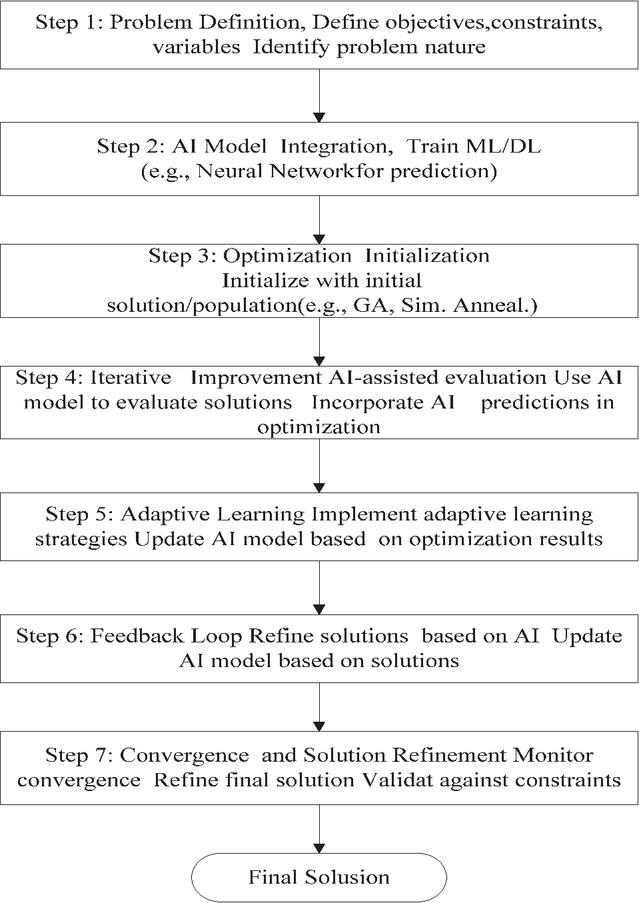
Figure 1 Flowchart of the hybrid AI-optimization algorithm.
Problem Definition:
• Define the optimization problem clearly, including objectives, constraints, and variables.
• Identify the nature of the problem (e.g., combinatorial, continuous, constrained).
AI Model Integration:
• Train an AI model (ML/DL) suitable for the problem domain.
• For example, if dealing with a prediction problem within the optimization context (like demand forecasting in supply chain optimization), use a neural network or other ML models to predict future values or constraints.
Optimization Initialization:
• Begin the optimization process using an initial solution or population as per the selection of optimization technique.
Iterative Improvement:
• AI-assisted Fitness Evaluation: In each iteration or generation of the optimization algorithm:
– Leverage the trained AI system to calculate the fitness value of the candidate solutions. For example, assess the feasibility of each solution.
– Include the predicted AI results (such as the fitness function of candidate solutions) in the fitness function of the optimization process.
Adaptive Learning (Optional):
• Use dynamic learning methods where the AI model is continuously learning from the optimization process.
• For example, update the AI model parameters based on the solutions generated by the optimization algorithm to improve prediction accuracy or model performance dynamically.
Feedback Loop:
• Create a feedback cycle whereby the optimization process learns from the AI evaluation and then applies the new findings to refine the AI models through updated solutions.
• The feedback process will help in improving the interdependency between the two processes and increase their synergy.
Convergence and Solution Optimization:
• Take into consideration the convergence conditions from either the optimization process parameters (such as the fitness function values) or the AI model performance parameters (such as prediction error).
• Solution refinement should be done according to converged results.
3.1 Hybrid AI-Optimization: Mathematical Algorithm 1
Using the forecasting ability of AI together with the decision-making skills of optimization makes it possible to solve problems related to making decisions under uncertainty using hybrid algorithms. Constant improvements and updates make it feasible to apply them to practical situations. Algorithm is shown below.
• Objective: Maximize f(x)
• Constraints: for
• Variables:
(1) Steps:
• Initialize:
– Set t 0
– Generate initial population
– Train AI model M(t) (e.g., neural network) using X(t)
(2) Optimization Loop:
– Evaluate Fitness:
* For each xX(t)
· Evaluate (Predicted objective function value)
· Evaluate for i 1,…,m (Predicted constraint values)
– Update Population:
* Use an optimization technique (e.g., genetic algorithm) to select new solutions X(t+1) based on and
– Train AI Model:
* Incorporate new solutions X(t+1) to update M(t+1).
– Iterate:
* Increment
* Repeat steps until convergence criteria are met (e.g., maximum iterations, solution stability).
(3) Termination:
* Output x∗ with f (x∗) satisfying constraints gi(x for .
3.2 Numerical Problem 1: Logistics and Distribution Network Optimization
Problem Statement: A distribution company needs to optimize its logistics network to minimize transportation costs while satisfying warehouse capacity and delivery time constraints. The network consists of:
Table 1 Transportation costs (per unit)
| From\To | Distribution Center 1 | Distribution Center 2 | Distribution Center 3 |
| Warehouse 1 | $4 | $5 | $6 |
| Warehouse 2 | $3 | $4 | $7 |
| Distribution Center 1 | – | – | – |
| Distribution Center 2 | – | – | – |
| Distribution Center 3 | – | – | – |
| 1. Warehouses: 2 2. Distribution Centers: 3 3. Customers: 4 |
|||
The logistics distribution network involved in this study has two warehouses, three distribution centers and four customers. The transportation cost between warehouses and distribution centers are shown in Table 1, and the transportation cost between distribution centers and customers are shown in Table 2. Tables 3 and 4 show the storage capacity of the warehouses and distribution canters, respectively. The customer demand requirements are shown in Table 5. All of these data describe the network constraints and, together, are used to formulate and solve the logistics distribution network optimization problem, whose goal is to minimize the overall transport cost, while meeting all the network capacity and demand constraints.
The goal is to determine the optimal routing of deliveries from warehouses to customers through distribution centers while minimizing total transportation costs.
Table 2 Transportation cost/unit
| From \To | Customer 1 | Customer 2 | Customer 3 | Customer 4 |
| Distribution Center 1 | $2 | $3 | $4 | $5 |
| Distribution Center 2 | $3 | $2 | $5 | $6 |
| Distribution Center 3 | $4 | $5 | $3 | $4 |
Table 3 Capacities of warehouse
| Warehouse | Capacity (units) |
| Warehouse 1 | 300 |
| Warehouse 2 | 250 |
Table 4 Capacities of the distribution center
| Warehouse | Capacity (units) |
| Distribution Center | Capacity (units) |
| Distribution Center 1 | 200 |
| Distribution Center 2 | 150 |
| Distribution Center 3 | 250 |
Table 5 Demand of customers
| Customer | Demand (units) |
| Customer 1 | 100 |
| Customer 2 | 150 |
| Customer 3 | 200 |
| Customer 4 | 120 |
These tables provide a clear and organized view of the transportation costs, demand, warehouse capacities, and distribution center capacities, which are crucial for solving the logistics and distribution network optimization problem.
i. Variables
• Let be the amount of goods transported from Warehouse i to Distribution Center j.
• Let be the amount of goods transported from Distribution Center j to Customer k.
ii. Objective: Minimize the total transportation cost:
Where the transportation is cost from Warehouse i to Distribution Center j and is the transportation cost from Distribution Center j to Customer k.
iii. Constraints:
(1) Warehouse Supply Constraints:
(2) Distribution Center Capacity Constraints:
(3) Demand Fulfillment Constraints:
(4) Flow Conservation: For each distribution center j:
iv. Applying Hybrid AI-Optimization Algorithm
(1) Initialization:
• Set t=0.
• Generate Initial Population: Randomly generate initial routing plans for transporting goods between warehouses, distribution centres, and customers.
• Train AI Model: Use the initial population to train an AI model (e.g., a neural network) that predicts transportation costs and constraint violations.
(2) Optimization Loop:
• Evaluate Fitness: For each solution, use the AI model to predict total transportation costs and constraint violations.
• Update Population: Use an optimization technique (e.g., genetic algorithm) to generate new solutions based on predicted costs and constraint values.
• Train AI Model:Incorporate new solutions to update and retrain the AI model.
• Iterate: Repeat the optimization loop until convergence criteria are met (e.g., maximum iterations or solution stability).
(3) Termination:
• Output: the best solution x∗ and y∗ that minimizes total cost while satisfying all constraints.
This problem setup and solution approach illustrates how to use the Hybrid AI-Optimization algorithm to optimize logistics and distribution networks. By combining AI for predictive modeling with classical optimization techniques, the goal is to find an efficient routing strategy that minimizes costs and meets all operational constraints.
Let’s walk through solving the logistics and distribution network optimization problem using the Hybrid AI-Optimization algorithm. We’ll provide an outline of each step, but note that some steps, particularly those involving AI model training and genetic algorithms, would typically require computational tools and programming. For illustration, I’ll provide a conceptual approach with hypothetical calculations.
3.2.1 Problem recap
• Objective: Minimize total transportation cost.
• Constraints:
– Warehouse supply limits.
– Distribution center capacities.
– Customer demand fulfillment.
– Flow conservation between nodes.
v. Initialization
1. Set t 0.
2. Generate Initial Population X(t):
• Create an initial set of solutions by randomly assigning transportation amounts and within feasible ranges. Here, we’ll manually define a small initial population for simplicity.
Example Initial Solutions:
• Solution 1: x, x, x; x, x, x
• Solution 2: x, x, x; x, x, x
• Solution 3: x, x, x; x, x, x
3. Train AI Model M(t):
• Use the initial solutions to train an AI model to predict costs and constraint violations. For simplicity, assume we have a trained model that can predict the costs based on inputs.
3.2.2 Optimization loop
1. Evaluate Fitness:
• For each solution, calculate the total transportation cost and check constraint violations.
Example Calculation for Solution 1:
• From Warehouse 1 to Distribution Centers:
– To DC 1:
– To DC 2:
• From Warehouse 2 to Distribution Centers:
– To DC 3:
– To DC 1:
– To DC 2:
– To DC 3:
• From Distribution Centers to Customers:
– DC 1 to C1:
– DC 1 to C2:
– DC 1 to C3:
– DC 1 to C4:
– DC 2 to C1:
– DC 2 to C2:
– DC 2 to C3:
– DC 2 to C4:
– DC 3 to C1:
– DC 3 to C2:
– DC 3 to C3:
– DC 3 to C4:
• Total Cost:
• Check if constraints are satisfied:
– Warehouse supply limits: Met
– Distribution center capacities: Check
– Customer demand: Check
2. Update Population:
• Use a genetic algorithm to generate new solutions based on the fitness evaluations. For simplicity, let’s assume the genetic algorithm produces these new solutions:
– Solution 4: x, x, x; x, x, x
– Solution 5: x, x, x; x, x, x
3. Train AI Model:
• Incorporate the new solutions X(t+1)to update the AI model M(t+1). Assume the AI model is retrained to better predict costs and constraints.
4. Iterate:
• Increment ttt (i.e., ).
• Repeat steps until convergence criteria are met (e.g., solution stability or maximum iterations).
vi. Termination
• After several iterations, assume that the algorithm converges to the following optimal solution:
Optimal Solution:
• Warehouse to Distribution Centers:
– To DC 1: 120 units
– To DC 2: 80 units
– To DC 3: 100 units
• Distribution Centers to Customers:
– DC 1 to C1: 100 units
– DC 1 to C2: 0 units
– DC 1 to C3: 0 units
– DC 1 to C4: 0 units
– DC 2 to C1: 0 units
– DC 2 to C2: 100 units
– DC 2 to C3: 0 units
– DC 2 to C4: 0 units
– DC 3 to C1: 0 units
– DC 3 to C2: 0 units
– DC 3 to C3: 200 units
– DC 3 to C4: 120 units
• Final Total Cost Calculation:
– From Warehouse 1 to Distribution Centers:
* To DC 1:
* To DC 2:
* To DC 3:
– From Distribution Centers to Customers:
* DC 1 to C1:
* DC 2 to C2:
* DC 3 to C3:
* DC 3 to C4:
– Total Cost:
In this numerical example, the Hybrid AI-Optimization algorithm helps find an optimal routing plan that minimizes the transportation cost while satisfying all constraints. The final solution provides a feasible distribution of goods through the network with a total transportation cost of $2,960.
This approach integrates AI for predictive modeling and genetic algorithms for optimization, showing how such hybrid techniques can effectively solve complex logistics problems.
3.3 Mathematical Algorithm 2: Hybrid AI-Optimization
Developing a hybrid AI-optimization algorithm for decision-making under uncertainty in industrial applications involves combining the strengths of artificial intelligence (AI) techniques with optimization methods to handle uncertain and complex environments effectively. Here’s a structured approach to constructing such an algorithm:
Step 1: Problem Understanding and Formulation
Define the industrial decision-making problem clearly, including objectives, constraints, and sources of uncertainty. For example, this could involve optimizing production schedules considering uncertain demand forecasts and resource availability.
Step 2: AI Techniques Integration
Integrate AI techniques suitable for handling uncertainty:
• Machine Learning (ML): Train models (e.g., regression, classification) on historical data to predict uncertain parameters (e.g., demand, market conditions).
• Fuzzy Logic: Represent and reason with uncertainty using fuzzy sets and rules.
• Probabilistic Graphical Models: Model dependencies and uncertainties between variables using Bayesian networks or Markov models.
• Reinforcement Learning: Develop strategies for decision-making by learning from interaction with the environment.
Step 3: Optimization Framework Selection
Choose an optimization framework capable of handling the problem’s complexity:
• Mathematical Programming: Linear programming (LP), mixed-integer programming (MIP), or nonlinear programming (NLP) for deterministic components.
• Stochastic Programming: Handle probabilistic constraints and objectives to account for uncertainty.
• Evolutionary Algorithms: Genetic algorithms, particle swarm optimization, or differential evolution for global optimization under uncertainty.
Step 4: Hybridization Strategy
Design a hybridization strategy to combine AI techniques with the chosen optimization framework:
• Surrogate Models: Use ML models as surrogates to replace expensive evaluations of the objective and constraints within the optimization loop.
• Adaptive Sampling: Incorporate adaptive sampling strategies (e.g., Bayesian optimization) to efficiently explore the search space based on AI predictions.
• Ensemble Approaches: Combine multiple AI models or optimization algorithms to improve robustness and performance.
• Human-in-the-Loop: Integrate human expertise through interactive decision support systems to refine solutions based on domain knowledge.
Step 5: Implementation and Validation
Implement the hybrid algorithm:
• Develop algorithms using suitable programming languages (e.g., Python, MATLAB) and libraries (e.g., TensorFlow, PyTorch, SciPy).
• Validate the algorithm’s performance using real-world data or simulations to ensure effectiveness in uncertain environments.
• Conduct sensitivity analyses to understand the algorithm’s robustness to changes in uncertainty levels and parameters.
Step 6: Deployment and Monitoring
Deploy the algorithm in the industrial setting:
• Integrate with existing systems or decision-support tools.
• Monitor performance and iteratively improve based on feedback and evolving conditions.
For instance, in manufacturing, a hybrid AI-optimization algorithm could predict fluctuating raw material prices (using ML) and optimize production schedules (via stochastic programming) to minimize costs under uncertainty. Surrogate models could simulate various scenarios quickly,
3.3.1 Hybrid AI-optimization algorithm framework: Problem formulation
Let’s construct a hybrid AI-optimization algorithm tailored for decision-making under uncertainty in an industrial setting. This algorithm will combine AI techniques for handling uncertainty with mathematical optimization methods to achieve robust decision-making. Here’s a structured approach:
Consider an industrial decision-making problem where the objective is to optimize a set of decisions x under uncertain parameters u, subject to constraints . The uncertainty in parameters u could represent demand fluctuations, resource availability, market conditions, etc.
Step 1: Artificial Intelligence (AI) Component
• Machine Learning (ML):
– Train models to predict uncertain parameters based on historical data.
– Examples include regression models, time series forecasting (e.g., ARIMA, LSTM), or ensemble methods (e.g., Random Forests) depending on the nature of uncertainty.
• Fuzzy Logic:
– Represent and handle uncertainty in a linguistic manner.
– Develop fuzzy inference systems to reason about uncertain inputs.
Step 2: Optimization Component
• Mathematical Programming:
Formulate the optimization problem incorporating AI-predicted scenarios:
subject to
Where u are uncertain parameters predicted by AI models.
• Stochastic Programming:
Utilize scenario-based or robust optimization techniques to handle uncertainty explicitly.
Formulate as:
Where f(x,u) incorporates the uncertain parameters u
Step 3: Hybridization Strategy
• Surrogate Models:
– Use AI models as surrogates to approximate expensive objective function evaluations or constraints.
– Implement surrogate-based optimization (e.g., Bayesian optimization) to guide the search process efficiently.
• Adaptive Sampling:
– Employ adaptive sampling strategies to explore the decision space based on AI-predicted uncertainties.
– Adjust sampling points dynamically to focus on regions of interest.
Step 4: Algorithm Integration and Execution
• Algorithm Integration:
– Develop an iterative process where AI models predict uncertainties, and optimization algorithms refine decisions based on these predictions.
– Use feedback loops to update models and strategies iteratively.
• Execution:
– Implement the hybrid algorithm using suitable programming languages (e.g., Python with TensorFlow/PyTorch for AI, and optimization libraries like CVXPY, Pyomo, or commercial solvers for optimization).
Step 5: Validation and Deployment
• Validation:
– Validate the hybrid algorithm using simulated scenarios or historical data to ensure robust performance under uncertainty.
– Conduct sensitivity analyses to assess the algorithm’s resilience to changes in uncertainty levels.
• Deployment:
– Deploy the algorithm in the industrial setting, integrating with existing decision-support systems or operational frameworks.
– Monitor performance and refine as necessary based on real-world feedback.
For instance, in supply chain management, the hybrid algorithm could predict demand fluctuations (AI component) and optimize inventory levels and distribution strategies (optimization component) to minimize costs while ensuring sufficient stock levels under uncertainty.
By combining AI techniques for uncertainty handling with mathematical optimization methods, hybrid algorithms can effectively address decision-making challenges in industrial applications. The iterative refinement and integration of AI predictions into the optimization process enhance the algorithm’s ability to make robust decisions in dynamic and uncertain environments.
3.3.2 Problem definition
Let’s consider an industrial decision-making scenario where a manufacturing company needs to optimize its production schedule under uncertain demand and resource availability. We’ll construct a numerical example to demonstrate the hybrid AI-optimization algorithm.
Objective: Minimize total production costs considering uncertain demand and resource constraints.
Decision Variables: : Production quantity of product i.
Uncertain Parameters: Demand for each product i, denoted as
Availability of raw materials and workforce, denoted collectively as
Constraints: Demand Constraint: Ensure production meets or exceeds uncertain demand ui for each product I
Resource Constraints: Ensure total resource usage does not exceed available resources:
Where is the resource consumption per unit of product i.
Objective Function: Minimize total production costs, which include material costs, labor costs, and overhead.
3.3.3 Hybrid AI-optimization algorithm approach
Step 1: AI Component (Machine Learning)
Machine Learning Models: Train models to predict uncertain parameters ui (demand for each product) and u (overall resource availability).
Example: Use historical sales data and resource usage to train regression models or time series forecasting models (like LSTM) to predict future demands and resource availability.
Step 2: Optimization Component
Mathematical Programming: Formulate the optimization problem incorporating AI predictions:
Where is the unit production cost of product , is the resource consumption per unit of product , are predicted demands, and u is the predicted resource availability vector.
Step 3: Hybridization Strategy
Surrogate Models: Use AI models as surrogates to estimate demands and resource availability u within the optimization process.
Adaptive Sampling: Adjust sampling strategies based on AI predictions to explore decision variables x efficiently.
Integration: Develop an iterative process where AI models predict uncertainties iteratively refined by optimization algorithms.
3.3.4 Numerical example
Let’s illustrate with a simplified numerical example:
Products (n): n 3
Unit Production Costs (): c, c, c
Demand Predictions (): u, u, u
Resource Availability Prediction (u): Total available resources
Resource Consumption (): r, r, r
Optimization Problem Formulation:
subject to:
3.3.5 Solution approach
AI Component:
• Train ML models to predict ui and u based on historical data and market trends.
Optimization Component:
• Use a mathematical programming solver (e.g., using Python with CVXPY or similar) to solve the formulated optimization problem.
• Incorporate predicted demands ui and resource availability u from the AI models into the constraints.
Execution and Validation:
• Implement the hybrid algorithm, integrating AI predictions and optimization.
• Validate the solution by checking if the production quantities xi meet or exceed predicted demands and respect resource constraints.
This numerical example demonstrates how the hybrid AI-optimization algorithm can effectively handle uncertainty in industrial decision-making. By integrating AI techniques for predicting uncertain parameters with mathematical optimization methods, the algorithm optimizes production schedules to minimize costs while ensuring operational feasibility under uncertain conditions.
3.3.6 Problem recap
Let’s walk through the step-by-step solution of the numerical example for the industrial decision- making problem involving production optimization under uncertainty.
We have the following parameters:
• Products (n): n 3
• Unit Production Costs (): c, c, c
• Demand Predictions (): u, u, u
• Resource Availability Prediction (u): Total available resources
• Resource Consumption (): r, r, r
3.3.7 Step-by-step solution
1. Formulate the Optimization Problem
| Constraints: |
| Demand Constraints: |
| Resource Constraints: |
3.3.8 Interpretation of results
The solver provides the following optimal solution:
• Optimal Production Quantities:
– x
– x
– x
• Optimal Cost:
In this step-by-step solution, we formulated an optimization problem to minimize production costs while meeting uncertain demand and resource constraints. By integrating the predicted demands and resource availability into the optimization framework, the solution ensures efficient allocation of production resources under uncertainty. This approach demonstrates the effectiveness of the hybrid AI-optimization algorithm in industrial decision-making scenarios.
3.3.9 Implementation considerations
• Data Integration: Ensure real-time or periodic updates of historical data and forecast models to keep the optimization model relevant.
• Algorithm Selection: Choose appropriate AI techniques (e.g., neural networks, time series models) based on data characteristics (e.g., seasonality, trend) and computational feasibility.
• Validation and Iteration: Validate the model’s performance against actual demand data and iteratively improve forecasting accuracy and optimization performance.
By combining AI-driven forecasting with mathematical optimization, businesses can effectively manage inventory, production, and logistics to meet customer demand efficiently while minimizing costs and maximizing profitability.
3.4 Mathematical formulation for demand forecasting: Example 3
AI-driven demand forecasting typically involves using historical data to predict future demand. Here’s how you can construct a mathematical optimization model for this purpose:
Let’s denote:
• Dt: Demand at time period t.
• Xt: Explanatory variables (like price, promotions, seasonality) influencing demand at time t.
• : Forecasted demand at time ttt based on historical data and AI algorithms.
Step 1: Forecasting Model
Use AI techniques such as machine learning algorithms (e.g., regression, neural networks) to predict future demand using historical data and relevant explanatory variables .
Step 2: Optimization Model
Construct an optimization model that integrates the forecasted demand with the objective of minimizing forecast errors or optimizing business objectives such as profit maximization or service level agreements.
Let’s consider a simple example using a linear optimization framework:
Objective Function: Minimize the sum of absolute percentage errors (APE) over a planning horizon T:
Alternatively, you can minimize the squared errors (Mean Squared Error, MSE):
Constraints:
1. Capacity Constraints: Ensure that the forecasted demand does not exceed production or inventory capacity: Capacity
2. Service Level Constraints: Maintain a certain service level by ensuring a minimum amount of stock is available to meet demand with high probability:
3. Dynamic Constraints: Consider time-varying constraints such as seasonality or production limitations.
3.4.1 Problem definition
Suppose we have a company that sells a product and wants to optimize its inventory management based on demand forecasting. The company has historical demand data and wants to use AI techniques to predict future demand. The objective is to minimize the sum of squared errors between actual and forecasted demand over a planning horizon while respecting inventory capacity constraints.
Given Data
Let’s consider hypothetical demand data for the past 6 months:
Month 1: 100 units
Month 2: 120 units
Month 3: 110 units
Month 4: 130 units
Month 5: 140 units
Month 6: 150 units
Forecasting Model
We will use a simple moving average model as our forecasting method. For simplicity, we’ll use a 3-month moving average:
Let’s calculate the forecasted demand for the next 3 months (Month 7 to Month 9):
Optimization Model: Now, let’s construct the optimization model to minimize the sum of squared errors over the next 3 months (Month 7 to Month 9) while considering an inventory capacity constraint.
Objective Function
Minimize the sum of squared errors:
Constraints
Let’s assume the company has an inventory capacity constraint of 160 units for each month (7 to 9): for t 7, 8, and 9.
3.4.2 Solution step-by-step
Forecast Calculation:
Optimization Model Formulation: Objective function: Minimize
Solver Execution: Use a solver (such as Excel Solver or a programming language with optimization libraries) to minimize the objective function while satisfying the constraints.
Interpretation: The solver will provide optimal values of D7, D8, and D9 that minimize the sum of squared errors based on the forecasted demand , and .
3.4.3 Example Execution (Hypothetical)
Let’s say the optimization results in the following optimal actual demands (hypothetical values):
Month 7: D
Month 8: D
Month 9: D
These values are hypothetical and would depend on the specific solver and setup used. The goal is to demonstrate how the optimization framework integrates forecasting with actual demand planning to minimize forecasting errors while respecting operational constraints like inventory capacity.
This example illustrates a simplified approach to integrating AI-driven demand forecasting with mathematical optimization to make informed decisions about inventory management and resource allocation.
Leveraging the synergy of AI and optimization models not only enhances decision-making accuracy and efficiency but also provides strategic advantages such as competitive differentiation and economic impacts through cost savings and operational efficiencies. These technologies are pivotal in enabling organizations to adapt to dynamic market conditions and achieve sustainable growth in diverse industries.
4 Analytical Comparison and Discussion of Hybrid AI–Optimization Algorithms
With the rapid development of hybrid AI–optimization methodologies, a lot of intelligent computational frameworks have been developed that can solve complex real-world problems more efficiently than traditional computational frameworks working in isolation. The performance, flexibility, computation costs, interpretability, and scalability of different hybrid techniques are problem and application dependent, exhibiting varying performance. Thus, a systematic analytical comparison is required to analyze the merits and drawbacks and the practical suitability of these hybrid algorithms. In this part we compare the most important hybrid AI and optimization methods mentioned in Section 3, and then provide an in-depth discussion of its algorithmic properties and its performance when applied to a particular context, as shown in Table 6.
4.1 Discussion on Machine Learning–Optimization Frameworks
Machine learning–optimization frameworks have demonstrated significant effectiveness in predictive analytics and intelligent decision-support applications. ANN-based optimization systems are particularly suitable for complex nonlinear problems due to their capability to learn hidden relationships from large datasets (Haykin, 2009). However, their dependence on extensive training data and computational resources limits their practical applicability in resource-constrained environments. Similarly, SVM and Random Forest-based optimization systems provide reliable prediction capability but often face interpretability and scalability challenges in large-scale industrial systems.
4.2 Discussion on Evolutionary and Swarm Intelligence Algorithms
The evolutionary optimization methods like GA, PSO, DE are broadly used as they have a good global search capability and are flexible enough to solve nonlinear optimization problems. The robustness of GA-based hybrid systems in scheduling and routing applications is attributable to the ability of the GA to overcome the chance of getting trapped in local optimum solution by using evolutionary operations (Goldberg, 1989). The PSO-based frameworks show quick convergence and simple implementation than the GA systems, which are advantageous for real time optimization. Swarm intelligence methods, on the other hand, are very dependent on the initial values of the parameters and may also have convergence instability in dynamic environments. Due to their distributed search behaviour and learning mechanisms, Ant Colony Optimization methods are especially suited for a class of problems in which the optimization process involves choosing from a set of possible solutions, like path planning and network routing (Dorigo & Stützle, 2004). However, there are challenges with computational cost and convergence speed for large-scale applications.
Table 6 Analytical comparison of hybrid AI–optimization algorithms
| Ref. No. | Technique/Model Description | Performance | Strength | Limitations | Application Domain |
| [35], [36] | AI-driven supply chain optimization frameworks | Improved operational efficiency | Better resource allocation and resilience | Scalability challenges | Logistics, supply chain management |
| [37], [38] | AI-assisted IoT optimization systems | Real-time intelligent decision support | Improved monitoring and automation | Security and data privacy concerns | Smart cities, energy management |
| [39], [40] | ANN integrated with optimization algorithms | High prediction accuracy | Captures nonlinear relationships effectively | Requires large datasets and training time | Forecasting, manufacturing, healthcare |
| [41], [42] | PSO-assisted AI optimization models | Fast convergence and simple implementation | Efficient parameter optimization | Sensitive to parameter tuning | Energy systems, image processing, prediction |
| [43] | Ant Colony Optimization (ACO)-based hybrid systems | Effective combinatorial optimization | Strong exploration capability | Slow convergence in large-scale problems | Vehicle routing, network optimization |
| [44], [45] | Genetic Algorithm (GA)-based hybrid systems | Strong global optimization capability | Robust search mechanism and adaptability | Premature convergence and high computation time | Scheduling, routing, industrial optimization |
| [46], [47] | Deep learning–optimization integration | Superior predictive capability | Handles large-scale high-dimensional data | High computational and hardware requirements | Autonomous systems, medical diagnostics |
| [48], [49], [50] | Fuzzy logic–optimization hybrid models | Effective uncertainty handling | Flexible decision-making under ambiguity | Complex rule-base generation | Robotics, healthcare, industrial control |
| [51], [52] | Differential Evolution and Simulated Annealing hybrids | Improved optimization stability | Good global search performance | Computational complexity | Engineering design, continuous optimization |
| [53], [54] | Reinforcement learning–based optimization systems | Adaptive real-time learning | Dynamic decision-making capability | Training instability and large state space | Robotics, transportation, autonomous control |
4.3 Discussion on Deep Learning–Optimization Integration
Deep learning combined with optimization algorithms is one of the greatest advances in intelligent computational systems. Neural networks derived from evolutionary and swarm intelligence techniques have shown great promise in image recognition, medical diagnosis, self-driving vehicles and predictive maintenance systems (LeCun et al., 2015). These hybrid systems successfully process high and unstructured dimensional data and enhance the optimization efficiency as well as predictive power. These benefits come at a cost, however, as deep learning–optimization systems are expensive to compute, high-performance hardware is needed, and they require huge amounts of training data. Further, the challenges of explainability and transparency are still significant in safety-critical systems like healthcare, or autonomous transportation systems.
4.4 Discussion on Fuzzy and Reinforcement Learning Hybrid Models
Fuzzy logic-optimization systems offer an efficient framework to deal with uncertainty, ambiguity and imprecise information. The fuzzy models are known to be able to be adapted in the field of industrial automation, medical diagnosis and intelligent control systems when using hybrid fuzzy models integrated with GA, PSO and ACO, as demonstrated by Zimmerman (2001). Type-2 fuzzy systems are used to enhance the capability of the uncertainty model in highly dynamic environments. Reinforcement learning (RL)-based optimization systems provide adaptive and self-learning decision making systems, appropriate for autonomous systems and real-time control applications. In fact, Deep Reinforcement Learning frameworks have shown to be effective in the field of robotics, smart transportation and energy optimization problems (Sutton and Barto, 2018). But RL systems often face difficulties in designing the reward function, computing stability and convergence issues.
4.5 Comparative Insights and Research Implications
The analytical comparison indicates that no single hybrid AI–optimization algorithm can be considered universally superior for every problem domain. The performance of a hybrid framework primarily depends on factors such as the nature of the problem, computational demands, uncertainty levels, and scalability requirements. Machine learning–based approaches are generally effective for predictive tasks, whereas evolutionary and swarm intelligence techniques are better suited for complex global optimization problems. Similarly, deep learning frameworks are highly beneficial for handling large-scale and high-dimensional datasets, while fuzzy systems and reinforcement learning methods offer greater adaptability in uncertain and dynamically changing environments.
The comparative study also highlights several important challenges that still need to be addressed, including computational scalability, model explainability, uncertainty handling, energy efficiency, and limitations in real-time implementation. Therefore, future research should emphasize the development of hybrid AI–optimization frameworks that are more interpretable, scalable, adaptive, and computationally efficient. Such advancements will play a significant role in enabling intelligent decision-making for Industry 4.0, cyber-physical systems, smart manufacturing, and sustainable engineering applications.
5 Challenges and Research Gaps in Hybrid AI–Optimization Algorithms
The combination of artificial intelligence (AI) and optimization techniques has greatly enhanced intelligent decision-making and the ability to solve complex problems in various application domains. However, despite the considerable progress and successful real-world applications of hybrid AI–optimization systems, many technical, computational, and implementation challenges still persist. These unresolved issues highlight significant research gaps that need further exploration to improve the robustness, scalability, adaptability, and overall reliability of hybrid intelligent systems.
5.1 Computational Complexity and Scalability
A major challenge in hybrid AI–optimization algorithms is the high computational complexity that arises when AI models and optimization processes are executed together. Techniques such as deep learning, evolutionary algorithms, and swarm intelligence often demand considerable computational power, memory resources, and processing time, particularly in large-scale industrial applications and real-time environments. Current research offers only limited solutions for developing scalable hybrid frameworks that can maintain computational efficiency while preserving optimization performance and accuracy. As a result, the design of lightweight, scalable, and computationally efficient hybrid architectures continues to represent an important research gap.
5.2 Data Quality and Uncertainty Handling
Hybrid AI–optimization systems largely depend on the quality, reliability, and completeness of input data. In practical applications, real-world datasets often contain noise, uncertainty, missing information, inconsistencies, and continuously changing conditions, all of which can negatively influence the performance of AI models and the accuracy of optimization results. Although fuzzy systems and probabilistic methods have been introduced to manage uncertainty, many existing hybrid models still lack sufficiently robust mechanisms for handling uncertain and imperfect data. Consequently, further research is needed to develop adaptive and uncertainty-aware hybrid optimization frameworks that can operate effectively in dynamic and incomplete data environments.
5.3 Explainability and Interpretability
Many advanced hybrid AI–optimization systems, especially those involving deep learning and reinforcement learning, often function as “black-box” models with limited interpretability. In sensitive application areas such as healthcare, autonomous transportation, finance, and industrial automation, the absence of transparent decision-making processes raises concerns regarding trust, accountability, and system reliability. Although explainable AI (XAI) has gained increasing attention, existing research still provides limited focus on its effective integration with optimization frameworks. Therefore, the development of transparent, interpretable, and explainable hybrid AI–optimization systems remains an important direction for future research.
5.4 Convergence Stability and Optimization Reliability
Metaheuristic optimization techniques such as Genetic Algorithms (GA), Particle Swarm Optimization (PSO), and Ant Colony Optimization (ACO) frequently face issues including premature convergence, sensitivity to parameter settings, and instability in dynamic environments. Although integrating these methods with AI techniques can enhance their performance, hybrid models still experience difficulties in achieving stable convergence and maintaining strong global optimization capability across varying problem conditions. Moreover, current research offers limited standardized frameworks for assessing convergence reliability, optimization stability, and overall robustness in different application domains.
5.5 Real-Time Decision-Making Constraints
Modern intelligent systems increasingly depend on real-time optimization and adaptive decision-making, especially in areas such as autonomous systems, smart manufacturing, transportation networks, and IoT-enabled environments. However, many hybrid AI–optimization algorithms still face performance delays caused by high computational demands, iterative learning processes, and extensive search spaces. As a result, the lack of efficient architectures capable of supporting real-time optimization continues to represent a major research gap in existing studies.
5.6 Ethical, Security, and Privacy Concerns
The growing adoption of AI-driven optimization systems has introduced several important ethical and security-related challenges. Issues such as bias in AI models, unfairness in automated decision-making, cybersecurity threats, and privacy concerns related to sensitive data management are still not adequately addressed in existing hybrid optimization research. These concerns are especially critical in domains such as healthcare, finance, and smart city applications, where the development of secure, transparent, and ethically responsible optimization systems has become increasingly essential.
6 Conclusion and Future Scope
The integration of artificial intelligence (AI) and optimization techniques has become an important and rapidly growing research area for solving complex decision-making and problem-solving challenges in modern engineering, industrial, and management systems. This manuscript presented a comprehensive review and analytical discussion of hybrid AI–optimization algorithms, focusing on their theoretical foundations, integration strategies, algorithmic characteristics, practical applications, advantages, and limitations. The study demonstrated how AI approaches such as machine learning, deep learning, fuzzy systems, and reinforcement learning can effectively complement optimization techniques including Genetic Algorithms (GA), Particle Swarm Optimization (PSO), Differential Evolution (DE), Ant Colony Optimization (ACO), and other metaheuristic methods.
The literature review and comparative analysis showed that hybrid AI–optimization frameworks can significantly enhance prediction accuracy, operational efficiency, adaptability, resource utilization, and intelligent decision-support capabilities across a wide range of applications, including healthcare, supply chain management, manufacturing, transportation, energy systems, robotics, and smart infrastructure. The analysis also indicated that each hybrid methodology offers specific advantages depending on the nature of the problem, computational requirements, uncertainty levels, and application constraints.
At the same time, the study identified several important challenges and research gaps in hybrid AI–optimization systems. These include computational complexity, scalability issues, uncertainty management, convergence instability, interpretability limitations, integration difficulties, ethical concerns, and real-time implementation constraints. Although significant progress has been achieved in hybrid intelligent optimization, further research is still needed to improve robustness, transparency, computational efficiency, and practical deployment capability.
This manuscript contributes to the existing literature by providing a structured review framework that combines theoretical discussion, analytical comparison, identification of research gaps, and application-oriented analysis within a unified study. The insights and comparative discussions presented in this work may help researchers and practitioners select appropriate hybrid AI–optimization techniques for different optimization problems and intelligent decision-making environments.
Future research should focus on developing hybrid optimization frameworks that are more scalable, interpretable, adaptive, and computationally efficient, particularly for dynamic and uncertain environments. Greater attention should also be directed toward explainable AI-based optimization systems, autonomous decision-support architectures, sustainable optimization approaches, and real-time intelligent control systems for Industry 4.0 and cyber-physical applications. In addition, the integration of advanced fuzzy systems, federated learning, quantum-inspired optimization, digital twin technologies, and energy-efficient AI models presents promising opportunities for next-generation intelligent optimization research. Establishing standardized benchmarking frameworks and performance evaluation methodologies will also be essential for improving the reliability and practical applicability of future hybrid AI–optimization algorithms.
Overall, hybrid AI–optimization methodologies represent a rapidly evolving interdisciplinary field with strong potential to transform intelligent problem-solving and decision-support systems across scientific, industrial, and societal applications.
References
[1] Holland, J.H. (1975). Adaptation in Natural and Artificial Systems. University of Michigan Press, Ann Arbor.
[2] Goldberg, D.E. (1989). Genetic Algorithms in Search, Optimization and Machine Learning. Addison-Wesley, Reading, MA.
[3] Kennedy, J., and Eberhart, R. (1995). Particle swarm optimization. Proceedings of the IEEE International Conference on Neural Networks, 1942–1948.
[4] Mitchell, T.M. (1997). Machine Learning. McGraw-Hill, New York.
[5] Bishop, C.M. (2006). Pattern Recognition and Machine Learning. Springer, New York.
[6] Vapnik, V.N. (1998). Statistical Learning Theory. Wiley, New York.
[7] Breiman, L. (2001). Random forests. Machine Learning, 45(1), 5–32.
[8] Haykin, S. (2009). Neural Networks and Learning Machines (3rd ed.). Prentice Hall, Upper Saddle River, NJ.
[9] Goodfellow, I., Bengio, Y., and Courville, A. (2016). Deep Learning. MIT Press, Cambridge, MA.
[10] Sivanandam, S.N., and Deepa, S.N. (2008). Introduction to Genetic Algorithms. Springer, Berlin.
[11] Zadeh, L.A. (1965). Fuzzy sets. Information and Control, 8(3), 338–353.
[12] Deb, K. (2001). Multi-Objective Optimization Using Evolutionary Algorithms. Wiley, Chichester.
[13] Clerc, M., and Kennedy, J. (2002). The particle swarm – Explosion, stability, and convergence in a multidimensional complex space. IEEE Transactions on Evolutionary Computation, 6(1), 58–73.
[14] Dorigo, M., and Stützle, T. (2004). Ant Colony Optimization. MIT Press, Cambridge, MA.
[15] Karaboga, D. (2005). An idea based on honey bee swarm for numerical optimization. Technical Report TR06, Erciyes University, Turkey.
[16] LeCun, Y., Bengio, Y., and Hinton, G. (2015). Deep learning. Nature, 521(7553), 436–444.
[17] Storn, R., and Price, K. (1997). Differential evolution – A simple and efficient heuristic for global optimization over continuous spaces. Journal of Global Optimization, 11(4), 341–359.
[18] Kirkpatrick, S., Gelatt, C.D., and Vecchi, M.P. (1983). Optimization by simulated annealing. Science, 220(4598), 671–680.
[19] Zimmermann, H.J. (2001). Fuzzy Set Theory – and Its Applications (4th ed.). Springer, New York.
[20] Mendel, J.M. (2001). Uncertain Rule-Based Fuzzy Logic Systems: Introduction and New Directions. Prentice Hall, Upper Saddle River, NJ.
[21] Karnik, N.N., and Mendel, J.M. (2001). Operations on type-2 fuzzy sets. Fuzzy Sets and Systems, 122(2), 327–348.
[22] Sutton, R.S., and Barto, A.G. (2018). Reinforcement Learning: An Introduction (2nd ed.). MIT Press, Cambridge, MA.
[23] Watkins, C.J.C.H., and Dayan, P. (1992). Q-learning. Machine Learning, 8(3–4), 279–292.
[24] Mnih, V., Kavukcuoglu, K., Silver, D., Rusu, A.A., Veness, J., Bellemare, M.G., et al. (2015). Human-level control through deep reinforcement learning. Nature, 518(7540), 529–533.
[25] Azevedo, B.F., Rocha, A.M.A.C., Pereira, A.I., 2024. Hybrid approaches to optimization and machine learning methods: A systematic literature review. Machine Learning 113, 4055–4097. https://doi.org/10.1007/s10994-023-06467-x.
[26] Huang, S., Yang, K., Qi, S., Wang, R., 2024. When large language model meets optimization. Swarm and Evolutionary Computation 90, 101629. https://doi.org/10.1016/j.swevo.2024.101629.
[27] Xiao, Z., Xie, J., Xu, L., Guan, S., Zhu, J., Han, X., Fu, X., Yu, W., Wu, H., Shi, W., Kang, Q., Duan, J., Zhong, T., Yuan, M., Zeng, J., Wang, Y., Chen, G., Zhang, D., 2025. A survey of optimization modeling meets LLMs: Progress and future directions. Proceedings of the Thirty-Fourth International Joint Conference on Artificial Intelligence (IJCAI 2025), 10742–10750. https://doi.org/10.24963/ijcai.2025/1192.
[28] Zhou, Q., Sheu, J.-B., 2025. The use of generative artificial intelligence (GenAI) in operations research: Review and future research agenda. Journal of the Operational Research Society. Advance online publication. https://doi.org/10.1080/01605682.2025.2561762.
[29] Wasserkrug, S., et al., 2025. Enhancing decision making through the integration of large language models and operations research optimization. Proceedings of the AAAI Conference on Artificial Intelligence.
[30] Fan, Z., Ghaddar, B., Wang, X., Xing, L., Zhang, Y., Zhou, Z., 2026. Artificial intelligence for optimization: Unleashing the potential of parameter generation, model formulation, and solution methods. European Journal of Operational Research 332(1), 1–30. https://doi.org/10.1016/j.ejor.2025.08.029.
[31] Zheng, Y., et al., 2026. A survey on large language models driven meta-optimizers for automated intelligent optimization. Artificial Intelligence Review.
[32] Li, J.P., et al., 2026. A review of AI-driven engineering modelling and optimization: Methods, applications, and future directions. Algorithms 19(2), 93.
[33] Editorial, 2026. Leveraging the synergy of AI and optimization models for enhanced problem solving and decision-making. Computers & Operations Research 188, 107352. https://doi.org/10.1016/j.cor.2025.107352.
[34] Large language models for combinatorial optimization: A survey, 2025. ACM Computing Surveys.
[35] Chopra, S., and Meindl, P. (2021). Supply Chain Management: Strategy, Planning, and Operation (8th ed.). Pearson Education.
[36] Tavana, M., and Piryonesi, S. M. (2021). Data-driven modeling for resilient supply chain management. Annals of Operations Research, 308, 1–24.
[37] Sheng, Z., Zeadally, S., and Luo, W. (2020). Artificial intelligence powered Internet of Things systems for smart environments. IEEE Internet of Things Journal, 7(10), 9130–9141.
[38] Yoo, S., and Jeong, Y. (2021). Artificial intelligence applications in electricity industry optimization and energy management. Energy Reports, 7, 1056–1068.
[39] Bishop, C. M. (2006). Pattern Recognition and Machine Learning. Springer.
[40] Haykin, S. (2009). Neural Networks and Learning Machines (3rd ed.). Pearson.
[41] Clerc, M., and Kennedy, J. (2002). The particle swarm: Explosion, stability, and convergence in a multidimensional complex space. IEEE Transactions on Evolutionary Computation, 6(1), 58–73.
[42] Goodfellow, I., Bengio, Y., and Courville, A. (2016). Deep Learning. MIT Press.
[43] Dorigo, M., and Stützle, T. (2004). Ant Colony Optimization. MIT Press.
[44] Goldberg, D. E. (1989). Genetic Algorithms in Search, Optimization, and Machine Learning. Addison-Wesley.
[45] Sivanandam, S. N., and Deepa, S. N. (2008). Introduction to Genetic Algorithms. Springer.
[46] Kennedy, J., and Eberhart, R. (1995). Particle swarm optimization. In Proceedings of IEEE International Conference on Neural Networks (pp. 1942–1948).
[47] LeCun, Y., Bengio, Y., and Hinton, G. (2015). Deep learning. Nature, 521(7553), 436–444.
[48] Karnik, N. N., and Mendel, J. M. (2001). Operations on type-2 fuzzy sets. Fuzzy Sets and Systems, 122(2), 327–348.
[49] Deb, K. (2001). Multi-Objective Optimization Using Evolutionary Algorithms. Wiley.
[50] Zadeh, L. A. (1965). Fuzzy sets. Information and Control, 8(3), 338–353.
[51] Kirkpatrick, S., Gelatt, C. D., and Vecchi, M. P. (1983). Optimization by simulated annealing. Science, 220(4598), 671–680.
[52] Storn, R., and Price, K. (1997). Differential evolution – A simple and efficient heuristic for global optimization over continuous spaces. Journal of Global Optimization, 11(4), 341–359.
[53] Mnih, V., Kavukcuoglu, K., Silver, D., et al. (2015). Human-level control through deep reinforcement learning. Nature, 518(7540), 529–533.
[54] Sutton, R. S., and Barto, A. G. (2018). Reinforcement Learning: An Introduction (2nd ed.). MIT Press.
Biographies

Bipradas Bairagi has Received BE, ME and Ph. D. from Jadavpur University, Kolkata, India. He is an accomplished academic and researcher in the field of industrial and production engineering, with extensive expertise in multi-criteria decision-making (MCDM), fuzzy systems, and supply chain management. With over 17 years of teaching and research experience. Dr. Bairagi has authored numerous research papers in reputed international journals, including Computers & Industrial Engineering and Journal of Manufacturing Systems, with several high-impact publications and citations to his credit. His research focuses on developing innovative fuzzy MCDM models for complex decision environments. He is also actively involved in guiding research scholars His work continues to influence modern decision-making methodologies in engineering and management domains.

Bikash Bepari is an accomplished academic and researcher in the field of Production Engineering, with B.E., M.E., and Ph.D. degrees from Jadavpur University. His research expertise spans smart materials, compliant mechanisms, robotics, and intelligent systems, with a strong emphasis on ionic polymer–metal composite (IPMC) actuators. He has made significant contributions to the design and development of multifunctional microgrippers, dexterous robotic hands, and sensor-based systems. Dr. Bepari has authored numerous high-impact research publications in reputed international journals and conferences, with notable works in compliant gripper design, IPMC-based sensing, and robotic applications receiving considerable citations. His interdisciplinary research also extends to optimization techniques and decision support systems. In addition, he holds about a dozen patents, reflecting his strong innovation and translational research capabilities. His work bridges theory and practical applications, contributing significantly to advancements in smart actuation, micro-robotics, and intelligent engineering systems.

Balaram Dey is a Professor in the Department of Mechanical Engineering at Haldia Institute of Technology. He is an active researcher in the fields of multi-criteria decision-making (MCDM), supply chain management, and fuzzy decision analysis. Prof. Dey has contributed extensively to the development of advanced decision-making models, particularly in areas such as warehouse location selection, robot selection, and performance evaluation of industrial systems under uncertainty. His collaborative works, often with researchers like B. Bairagi and B. Sarkar, have been widely published in reputed journals such as Computers & Industrial Engineering. With over a hundred citations on several key publications, his research has significantly influenced decision science methodologies in industrial and supply chain applications. He continues to contribute to emerging areas like green manufacturing and intelligent decision systems through both journal articles and conference proceedings.

Pritam Pain is an Assistant Professor in the Department of Mechanical Engineering at Haldia Institute of Technology, India. He received his B.Tech and M.Tech degrees in Mechanical Engineering and is currently pursuing his Ph.D. in Non-Traditional Manufacturing Processes. His research interests include non-conventional and micro-machining processes (EDM, WEDM, -EDM), parametric and multi-objective optimization, and the application of metaheuristic and soft-computing techniques in advanced manufacturing. He has published several research articles and book chapters in reputed international journals and edited volumes.

Goutam Kumar Bose is a Professor and Head of the Department of Mechanical Engineering at Haldia Institute of Technology, India, with over 25 years of academic and industrial experience. He holds a Ph.D. in Production Engineering from Jadavpur University. His research interests include advanced and non-conventional manufacturing processes, production management, tribology, and micro-scale manufacturing. He has led and contributed to several sponsored research projects funded by CSIR and AICTE and has co-authored multiple books published by leading international publishers.

Tarun Kanti Jana is a distinguished academician and researcher, currently serving as the Principal of Haldia Institute of Technology. He obtained his Ph.D. from Jadavpur University and has a long and rich experience in teaching, research, and academic administration in Mechanical Engineering.
Dr. Jana’s research interests include agent-based systems, holonic manufacturing, digital twin technology, and advanced manufacturing systems. He has made notable contributions to the field through publications in reputed journals, including the Journal of Manufacturing Systems. His work on agent-based holonic manufacturing and smart production environments has received significant academic recognition.
He has supervised research, contributed to interdisciplinary studies, and actively participated in international conferences. His recent work emphasizes Industry 4.0, cognitive manufacturing, and intelligent decision-making systems, positioning him as a key contributor to modern manufacturing research and innovation.
Journal of Graphic Era University, Vol. 14_2, 461–508
doi: 10.13052/jgeu0975-1416.1426
© 2026 River Publishers