Fuzzy Bounded Separation Method for Solving Fully Fuzzy Interval Integer Transportation Problems: A New Approach
Govind Pathak1,*, Haridas Roy2, Rakesh Kumar2 and Zahid Amin Malik2
1Directorate of Higher Education, Uttarakhand, Haldwani, India
2Department of Mathematics, M. B. Govt. P. G. College, Haldwani, India
E-mail: pathakgovind@rediffmail.com; hdroy1993@live.in; mlkzahidamin926@gmail.com; drrakeshsharma906@gmail.com
*Corresponding Author
Received 31 January 2026; Accepted 18 May 2026
Abstract
To solve fully fuzzy interval integer transportation problems, a new approach, known as the fuzzy bounded separation method, is proposed. This approach is based on the maximum modulus zero suffix method. The given problem is split into two fuzzy transportation problems, the fuzzy upper bounded interval transportation problem (FUBITP) and fuzzy lower bounded interval transportation problem (FLBITP), and the maximum modulus zero suffix approach is used to get the best solution. Without using any ranking approaches, the suggested strategy applies to a very similar situation. Numerical examples are used to demonstrate the solution process. When treating different types of logistic problems with fully fuzzy integer interval problems, decision makers may find the fuzzy bounded separation method to be extremely useful. This method follows a methodical process and is simple to use and comprehend.
Keywords: Fully fuzzy integer interval transportation problem, membership function, fuzzy bounded separation method.
1 Introduction
The transportation models are fruitful tools that play an important role, not only in the transportation problem but also in the production scheduling problem. In the transportation problem, goods should be delivered from various sources to various destinations at a minimum transportation cost. Various methods were introduced to solve the transportation problem with certain parameters. In real-life applications, it is difficult to determine those parameters with certainty, so they can be used to deal with interval transportation problems with uncertainty parameters. The fuzzy ideas first introduced by Zadeh [20]. Zimmermann [21] studied fuzzy programming and linear programming with different objective functions. Chanas et al. [1] formulated the classical, interval, and fuzzy TP and discussed the method for optimal solution of the fuzzy transportation problems. Many researchers have introduced various types of fuzzy transportation problems.
Sengupta, A. and Pal, T.K. [17] proposed, in the given objective functions, a fuzzy initialization of width at the midpoint of an integer interval. Youness, E. [19] introduced to solve a rough programming problem, where the decision set as a rough set. Pandian, P., and Natarajan, G. [8] proposed a new algorithm to solve the fully integer interval transportation problem without using the width and the centre point of the interval in the profit function. Sudhakar, V. J. and Navneetha, V. K. [18] proposed to determine an optimal solution for the integer interval transportation problem in separation by using the zero-suffix method. Ramesh, G., and Ganesan, K. [13] proposed a simplex-like algorithm to solve interval linear problems without converting them into classical linear programming problems. Fegade et al. [3] proposed finding an optimal solution to the transportation problem using interval and triangular membership functions. Quddoos et al. [12] proposed to find an optimal solution to a wide range of transportation problems directly using the ASM method. Safi et al. [15] solved fixed-charge transportation problems by converting the interval fuzzy constraints into multi-objective fuzzy constraints. Dash, S. and Mohanty, S.P. [2] proposed a compromise solution method for transportation problems that considers the unit cost of transportation from source to destination as an approximate integer interval Patel, J. G. and Dhodiya, J. M. [10] developed an interval transportation problem that could be converted into classical multi-objective transportation using the concepts of upper range, half width, lower range, and interval centre. Mohana [7] and Kumar et al. [11] proposed a solution for solving the interval integer transportation problem. Pandian et al. [9] developed a new method for addressing the fuzzy interval integer transportation problem by splitting and separation. Karthiyayini et al. [4] developed a novel strategy for dealing with fully interval transportation problems. Sarfaraz [16] demonstrated that interval-valued fuzzy approaches are effective in handling uncertainty in transportation problems. Many researchers addressed various methods for solving interval transportation problems, but only Pandian et al. [9] proposed a new method for solving interval transportation problems with fuzzy parameters, so we attempted to develop a new algorithm for solving fuzzy interval transportation problems with fewer iterations and easier than Pandian et al. method. Recent research in fuzzy transportation problems has focused on improving computational efficiency and reducing dependency on ranking functions. In this way, Roy et al. [14] demonstrated the robustness and ease of handling uncertainty by introducing a maximum modulus zero suffix method to achieve optimal solutions for fuzzy transportation problems. Building on these advancements, the current study addressed the fully fuzzy integer interval transportation problem via proposing a fuzzy bounded separation method. The proposed approach directly handles fuzzy integer interval parameters and extends the previous findings described in Pandian et al. [9] with simpler and more effective solutions, compared with several existing approaches that require conversion into crisp transportation models. To solve a fully fuzzy interval integer transportation problem where supply, demand, and the cost of transportation are all triangular fuzzy integers, we provide an innovative approach in this paper called the fuzzy bounded separation method.
In this paper, we propose a new method for solving a fully fuzzy interval integer transportation problem in which the transportation cost, supply, and demand are all triangular fuzzy integer intervals. We refer to this method as fuzzy bounded separation. Many approaches have been put presented by scholars;however, they are difficult to apply in fully fuzzy transportation problems. Pandian et al. [9] introduced new techniques for the fuzzy interval transportation problem, but they were used for the non-fuzzy transportation problem of the crisp method. Our systematic methodology is very easy to apply to any type of fuzzy interval integer transportation problem. We developed the method and applied it without converting it into a classical transportation problem. To help understand the proposed method and procedure, a numerical example is provided.
The rest of the paper is organised as follows: Section 2 represents table of list of symbols and abbreviations, Section 3 presents preliminaries, Section 4 describes the models and theorem, Section 5 explains the methodology, Section 6 provides a numerical example, Section 7 explains result, discussed and comparison, and Section 8 concludes the paper with future scope.
2 List of Symbols and Abbreviations
| Symbol/Abbreviation | Meaning |
| m | Number of sources |
| n | Number of destinations |
| Fuzzy interval number of units transported from source i to destination j | |
| Fuzzy interval transportation cost from source i to destination j | |
| Fuzzy interval supply at source i | |
| Fuzzy interval demand at destination j | |
| Membership function | |
| FFIITP | Fully Fuzzy Interval Integer Transportation Problem |
| FUITP | Fuzzy Upper Integer Transportation Problem |
| FLITP | Fuzzy Lower Integer Transportation Problem |
| FUBITP | Fuzzy Upper Bound Integer Transportation Problem |
| FLBITP | Fuzzy Lower Bound Integer Transportation Problem |
3 Preliminaries
Let denote the set of all fuzzy bounded interval over the real number R. that is, , where and ’s and ’s are in R}.
Now, we are going to defined some definitions, arithmetic operation and ordering of fuzzy numbers as follows;
Definition 3.1 Let and , where and , then
(i)
(ii) , if and , otherwise .
(iii) , where , .
Definition 3.2 Let and , then
(i) if and only if and
(ii) if and only if and
(iii) if and only if and
Definition 3.3 Membership function of the fuzzy interval where , , is defined by
The graph of is given below,
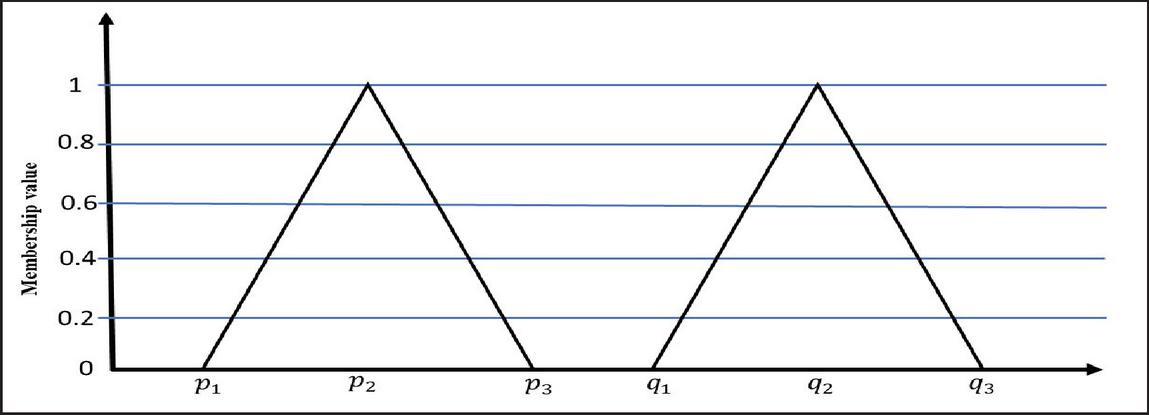
Figure 1 Graph of membership function corresponding triangular fuzzy interval.
4 Fully Fuzzy Interval Integer Transportation Problem
Let us consider the following fully fuzzy interval integer transportation problem (FFIITP) – Minimize
Subject to
| (1) | |
| (2) | |
| (3) |
Where the number of supply points, the number of demand points, is the fuzzy interval number of units transport from supply point i to demand point j
Remark If then the problem is balanced, otherwise it is unbalanced.
Definition 4.1 The set of fuzzy intervals , for all and is said to be a feasible solution of the problem (FFIITP) if the satisfy the Equations (1), (2) and (3).
Definition 4.2 The set of feasible solution , for all and is said to be an optimal solution of the problem (FFIITP) if , for all feasible solution , for and .
Now, the following theorem is helpful for proposed method which we established the relation of optimal solution of fully fuzzy interval integer transportation problem, and fuzzy lower and upper bound fuzzy transportation problems also, is used in proposed method, namely, fuzzy bounded separation method.
Theorem 1 If the set , for all i and j is an optimal solution of fuzzy upper bound integer transportation problem (FUBITP) of (FFIITP);
(FUBITP) Minimize
Subject to
| (4) | |
| (5) | |
| (6) |
And the set , for all i and j is an optimal solution of fuzzy lower bound integer transportation problem (FLBITP) of (FFIITP);
(FLBITP) Minimize
Subject to
| (7) | |
| (8) | |
| (9) |
Then the set of fuzzy intervals , for all i and j is an optimal solution of the (FFIITP) and least transportation cost , for all i and j provided , for , and .
Proof. Let , for all i and j be a feasible solution of (FFIITP).
Therefore , for all i and j and , for all i and j are feasible solution of (FUBITP) and (FLBITP).
Since, , for all i and j and , for all i and j are optimal solution of (FUBITP) and (FLBITP), we have
, for and .
Implies that,
That is,
Now since, , for all i and j and , for all i and j satisfy the Equations (4) to (9) and , for and . we can conclude that , for all i and j is a feasible solution of (FFIITP).
Thus, the set , for all i and j is an optimal solution of (FFIITP).
Hence theorem proved.
5 Fuzzy Bounded Separation Method
Now, we proposed a new algorithm namely, fuzzy bounded separation method and its proceeds below,
Step-1. First, we separated the given problem into fuzzy upper integer transportation problem (FUITP) andfuzzy lower integer transportation problem (FLITP).
Step-2. Check the both transportation problem balanced or not; if not, then converted to balanced.
(i) Subtract each element of the FTP table’s supply from the corresponding minimum, and then subtract each element of the reduced FTP table’s demand from the corresponding minimum.
(ii) If there is at least one zero in each supply row and demand column in the reduced FTP table, then find the fuzzy suffix value(s) for all zeros in the reduced FTP table using the following method:
(iii) Select every zero and mark the fuzzy suffix value as the method of step (ii). If the suffix values are equal, the fuzzy suffix value with the lowest unit cost for the given cell will be chosen.
(iv) Assign each demand to the corresponding supplies using the zero-cell with the maximumfuzzy suffix, and each supply to the corresponding demands using the zero-cell with the maximum fuzzysuffix.
(v) After step (iv), the exhausted demand or supply is reduced. The resulting table must have at least one zero for each supply and demand, or else the process must be repeated (i).
(vi) Repeat step (i) to step (v) until the optimal result is obtained.
Step-3. Solve FUITP using step (i) to step (vi) and let , for all i and j be an optimal solution of the FUITP.
Step-4. Solve FLITP using step (i) to step (vi) with upper bound constraint , for all i and j and let , for all i and j be an optimal solution of FLITP with , for and .
Step-5. The optimal solution of the given FFIITP is , for all i and j. (By the Theorem 1)
The proposed algorithm illustrated by the following example.
6 Numerical and Graphical Illustration
In this section, we solve the problem using the suggested approach and graph representation.
Example. Consider the following fully fuzzy interval integer Transportation problem (FFIITP)addressed by Pandian et al. (2018). In this problem, a company transports goods from three supply , and to three demand , and in which the transportation costs, supply and demand are represented by triangular fuzzy interval numbers.
Table 1 Fully fuzzy interval integer transportation problem (FFIITP)
| Supply | ||||
| [(5,6,7), (9,10,11)] | [(10,11,12), (14,15,16)] | [(7,8,9), (11,12,13)] | [(11,12,13), (15,16,17)] | |
| [(1,2,4), (5,6,7)] | [(2,3,5), (6,7,8)] | [(4,6,7), (8,9,10)] | [(9,10,11), (13,14,15)] | |
| [(0,3,4), (6,7,8)] | [(0,1,2), (3,4,5)] | [(8,9,10), (11,12,13)] | [(12,13,14), (16,18,19)] | |
| Demand | [(18,19,20), (22,24,25)] | [(9,10,11), (13,14,15)] | [(5,6,7), (9,10,11)] |
Solution Using step-1, Table 1 split into two tables, Fuzzy upper integer transportation problem (FUITP) and the fuzzy lower integer transportation problem (FLITP).
Now, the Fuzzy upper integer transportation problem (FUITP) of the given problem (FFIITP) is given below,
Table 2 Fuzzy upper integer transportation problem (FUITP)
| Supply | ||||
| (9,10,11) | (14,15,16) | (11,12,13) | (15,16,17) | |
| (5,6,7) | (6,7,8) | (8,9,10) | (13,14,15) | |
| (6,7,8) | (3,4,5) | (11,12,13) | (16,18,19) | |
| Demand | (22,24,25) | (13,14,15) | (9,10,11) |
Now, using Step-2 (ii) on Table 2 then we get reduced table,
Table 3 Reduced table
| Supply | ||||
| (0,0,0) | (5,5,5) | (0,0,0) | (15,16,17) | |
| (0,0,0) | (1,1,1) | (1,1,1) | (13,14,15) | |
| (3,3,3) | (0,0,0) | (6,6,6) | (16,18,19) | |
| Demand | (22,24,25) | (13,14,15) | (9,10,11) |
Now, applying step-2 (ii), Suffix .
The maximum fuzzy suffixat the position cell (1,3) i.e., after that using step-2 (iii) to (v), we get
Table 4 Modified reduced table
| Supply | ||||
| (0,0,0) | (5,5,5) | (0,0,0) | ||
| (9,10,11) | (6,6,6) | |||
| (0,0,0) | (1,1,1) | (1,1,1) | (13,14,15) | |
| (3,3,3) | (0,0,0) | (6,6,6) | (16,18,19) | |
| Demand | (22,24,25) | (13,14,15) | ||
| (0,0,0) |
Again, applying step-2 (ii), suffix .
The maximum fuzzy suffix at the position cell i.e., after that using step-2 (iii) to (v), we get
Table 5 Re modified reduced table
| Supply | |||
| (0,0,0) | (5,5,5) | ||
| (6,6,6) | (0,0,0) | ||
| (0,0,0) | (1,1,1) | (13,14,15) | |
| (3,3,3) | (0,0,0) | (16,18,19) | |
| Demand | (22,24,25) | (13,14,15) | |
| (16,18,19) |
Again, applying step-2 (ii), the maximum fuzzy suffix at the position cell (2,1) and (3,2) i.e., and after that using step-2 (iii) to (iv), we get
Table 6 Extended reduced table
| Supply | |||
| (0,0,0) | (1,1,1) | ||
| (13,14,15) | (0,0,0) | ||
| (3,3,3) | (0,0,0) | ||
| (3,4,4) | (13,14,15) | (0,0,0) | |
| Demand | |||
| (0,0,0) | (0,0,0) |
Table 7 Allocated table of FUITP
| Supply | ||||
| (9,10,11) | (14,15,16) | (11,12,13) | (15,16,17) | |
| (6,6,6) | (9,10,11) | |||
| (5,6,7) | (6,7,8) | (8,9,10) | (13,14,15) | |
| (13,14,15) | ||||
| (6,7,8) | (3,4,5) | (11,12,13) | (16,18,19) | |
| (3,4,4) | (13,14,15) | |||
| Demand | (22,24,25) | (13,14,15) | (9,10,11) |
The optimal solution of FUITP is
Least transportation cost of FUITP
Now, the fuzzy lower integer transportation problem (FLITP) of given problem (FFIITP) with the fuzzy upper bound constraint , for all i and j.
Table 8 Fuzzy lower integer transportation problem (FLITP)
| Supply | ||||
| (5,6,7) | (10,11,12) | (7,8,9) | (11,12,13) | |
| (1,2,4) | (2,3,5) | (4,6,7) | (9,10,11) | |
| (0,3,4) | (0,1,2) | (8,9,10) | (12,13,14) | |
| Demand | (18,19,20) | (9,10,11) | (5,6,7) |
Now, using Step-2 (ii) on Table 2 then we get
Table 9 New Reduced table
| Supply | ||||
| (0,0,0) | (5,5,5) | (0,0,0) | (11,12,13) | |
| (0,0,0) | (1,1,1) | (-2,2,4) | (9,10,11) | |
| (0,2,2) | (0,0,0) | (6,6,6) | (12,13,14) | |
| Demand | (18,19,20) | (9,10,11) | (5,6,7) |
Now, applying step-2 (ii), Suffix .
The maximum fuzzy suffix at the position cell i.e., after that using step-2 (iii) to (v), we get
Table 10 New modified reduced table
| Supply | ||||
| (0,0,0) | (5,5,5) | (0,0,0) | ||
| (5,6,7) | (6,6,6) | |||
| (0,0,0) | (1,1,1) | (2,2,4) | (9,10,11) | |
| (0,2,2) | (0,0,0) | (6,6,6) | (12,13,14) | |
| Demand | ||||
| (0,0,0) |
Again, applying step-2 (ii), Suffix .
The maximum fuzzy suffix at the position cell (1,1) i.e., after that using step-2 (iii) to (v), we get
Table 11 New re-modified reduced table
| Supply | |||
| (0,0,0) | (5,5,5) | ||
| (6,6,6) | (0,0,0) | ||
| (0,0,0) | (1,1,1) | (9,10,11) | |
| (0,2,2) | (0,0,0) | (12,13,14) | |
| Demand | (9,10,11) | ||
| (12,13,14) |
Again, applying step-2 (ii), the maximum fuzzy suffix at the position cell (2,1) and (3,2) i.e., and after that using step-2 (iii) to (iv), we get
Table 12 New extended reduced table
| Supply | |||
| (0,0,0) | (1,1,1) | ||
| (9,10,11) | (0,0,0) | ||
| (0,2,2) | (0,0,0) | ||
| (3,3,3) | (9,10,11) | (0,0,0) | |
| Demand | |||
| (0,0,0) | (0,0,0) |
Table 13 Final Allocated table of FLITP
| Supply | ||||
| (5,6,7) | (10,11,12) | (7,8,9) | (11,12,13) | |
| (6,6,6) | (5,6,7) | |||
| (1,2,4) | (2,3,5) | (4,6,7) | (9,10,11) | |
| (9,10,11) | ||||
| (0,3,4) | (0,1,2) | (8,9,10) | (12,13,14) | |
| (3,3,3) | (9,10,11) | |||
| Demand | (18,19,20) | (9,10,11) | (5,6,7) |
The optimal solution of FLITP with the fuzzy upper bounded condition is
Least transportation cost .
Thus, an optimal solution of the given FFIITP is
And, the least transportation cost is [(74,123,186), ((275,348,421)].
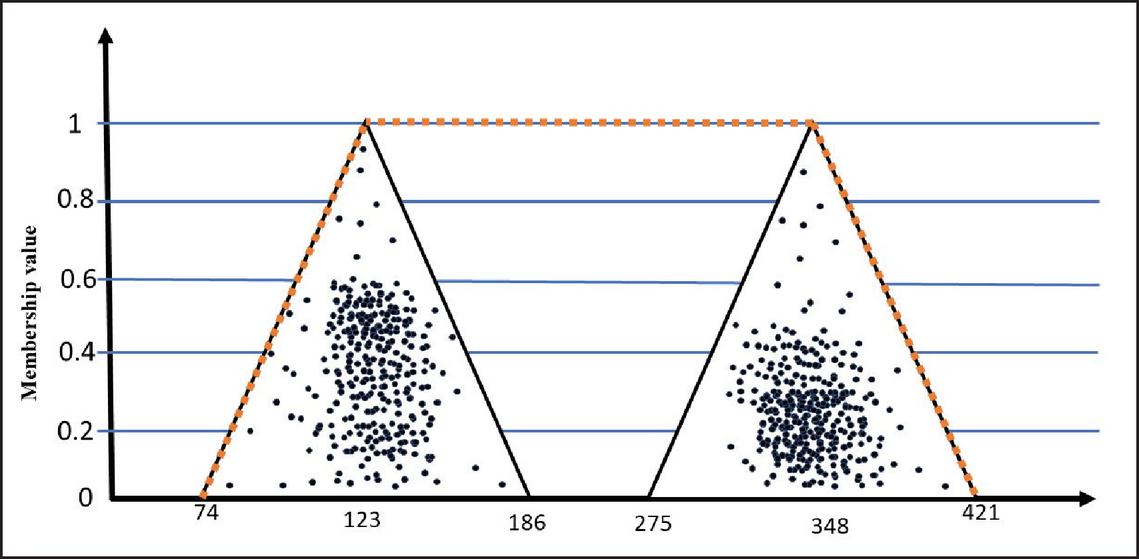
Figure 2 Optimal solution of the given problem in graphical.
Figure 2 depicts the optimal solution to the fully fuzzy interval integer transportation problem (FFIITP). Triangles with dotted points suggest an optimal solution that is concentrated in the middle, indicating a higher degree of membership function there.
7 Result and Discussions
In this study, a new approach called the fuzzy bounded separation method is proposed to solve fully fuzzy integer intervaltransportation problems in which supply, demand and transportation costs are in triangular fuzzy interval integers.
The obtained result coincides with the existing result of Pandian et al. (2018). However, the proposed method requires significantly fewer iterations compared with the existing method. The comparison is shown in table below –
Table 14 Comparison between proposed method and existing method
| Method | Pandian et al. (2018) | Proposed Method |
| Allocation | ||
| Iteration | 24 | 12 |
| Optimal solution | [(74,123,186), ((275, 348,421)] | [(74,123,186),(275,348,421)] |
8 Conclusion
In this study, a new approach called the fuzzy bounded separation method has been proposed to solve fully fuzzy integer interval transportation problem. This approachis based on the maximum modulus zero suffix method and provides a systematic procedure toyields the optimal solution without converting the fuzzy model into a crisp transportation problem. To further comprehend the suggested approach, a numerical example is provided. The proposed method can be a useful tool for decision-making when dealing with various sorts of logistic problems with fully fuzzy interval integer parameters. The numerical example shows that the proposed method produces the same optimal solution as existing approaches while requiring fewer computational iterations. Therefore, the method can be considered efficient and practical for solving with fully fuzzy interval integer parameters. Future research can be extended to more complex transportation models such as multi objective fuzzy transportation problems, fuzzy solid transportation problem, supply chain optimization problems, and largescale logistics planning problems.
References
[1] Chanas, S., Delgado, M., Verdegayand, J.L. and Vila, M.A. (1993). Interval and fuzzy extensions of classical transportation problems, TranspPlann Technol., 17, pp. 203–218.
[2] Dash, S. and Mohanty, S.P. (2013). Transportation programming under uncertain environment, International Journal of Engineering Research and Development, Vol. 7 pp. 22–28.
[3] Fegade, M. R., Jadhav, V. A. and Mulley, A. A. (2012). Solving fuzzy transportation problem by zero suffix method and robust ranking technology, IOSR Journal of Engineering, Vol. 2(7), pp. 36–39.
[4] Karthiyayini, G. P., Ananthalakshmi, S. and Ushaparameswari, R. (2019). An inventive method for solving fully interval transportation problem, SSRG International Journal of Mathematics Trends and Technology- special issue NCPAM, pp. 50–57.
[5] Keerthana, G. and Ramesh, G. (2019). A New Approach for Solving Integer Interval Transportation Problem with Mixed Constraints, Journal of Physics: Conference Series 1377 012043, pp. 1–14.
[6] Maity, G., Roy, S. K. and Verdegay, J.L. (2019). Time variant multi objective intervalvalued transportation problem in sustainable development, Sustainability, Vol. 11, pp. 0115.
[7] Mohana, V. (2018). Optimal Solution for Integer Interval Transportation Problem using Zero Point Method, International Journal of Pure and Applied Mathematics, Vol. 118, pp. 2287–2291.
[8] Pandian, P. and Natarajan, G. (2010). A New Method for Finding an Optimal Solution of fully interval integer transportation problem, Applied Mathematical Sciences, Vol. 4(37), pp. 1819–1830.
[9] Pandian, P., Natarajan, G. and Akhilbasa, A. (2018). fuzzy interval integer transportation problem, International Pure and Applied Mathematics, Vol. 119(9), pp. 133–142.
[10] Patel, J. G. and Dhodiya, J. M. (2017). Solving multi-objective interval transportation problem using grey situation decision-making theory based on grey numbers, International Journal of Pure and Applied Mathematics, Vol. 113, pp. 219–233.
[11] Purushothkumar, M.K., Ananathanarayanan, M. and Dhanasekar, S. (2018). A diagonal optimal algorithm to solve interval integer transportation problem, International Journal of Applied Engineering Research, Vol. 13, pp. 13702–13704.
[12] Quddoos, A., Shakeel, J. and Khalid, M. M. (2012). A New Method for Finding an Optimal Solution for Transportation Problems, International Journal on Computer Science and Engineering, Vol. 4, pp. 1271–1274.
[13] Ramesh, G. and Ganesan, K. (2011). Interval Linear Programming with generalized interval arithmetic, International Journal of Scientific & Engineering Research, Vol. 2, pp. 1–8.
[14] Roy, H., Pathak, G., Kumar, Rakesh and Malik, Z.A. (2024). Maximum modulus zerosuffix method for finding an optimal solution to fuzzy transportation problems. OPSEARCH 61, 897–917. https://doi.org/10.1007/s12597-023-00716-2
[15] Safi, M. R., and Razmjoo, A. (2013). Solving Fixed Charge Transportation Problem with Interval Parameters, Applied Mathematical Modelling, Vol. 37 (18-19), pp. 83418347.
[16] Sarfaraz, M. (2024). Interval-valued Pythagorean fuzzy aggregation operators for transportation selection, Spectrum of Engineering and Management Sciences, Vol. 2(1), pp. 1–12.
[17] Sengupta, A., and Pal, T.K. (2003). Interval-valued transportation problem with multiple penalty factors, VU Journal of Physical Sciences, Vol. 9, pp. 71–81.
[18] Sudhakar, V.J. and Navaneetha, V.K. (2010). A New Approach for Finding an Optimal Solution for Integer Interval Transportation Problems, Int. J. Open Problems Compt. Math., Vol. 3, pp. 131–137.
[19] Youness, E. (2006). Characterizing solutions of rough programming problems, European Journal of Operational Research, Vol. 168, pp. 1019–1029.
[20] Zadeh, L.A. (1965). Fuzzy sets, Inform. Control, Vol. 8, pp. 338–353.
[21] Zimmermann, H.J. (1978). Fuzzy programming and linear programming with several objective functions. Fuzzy Sets Syst. Vol. 1, pp. 45–55.
Journal of Graphic Era University, Vol. 14_2, 389–406
doi: 10.13052/jgeu0975-1416.1423
© 2026 River Publishers